
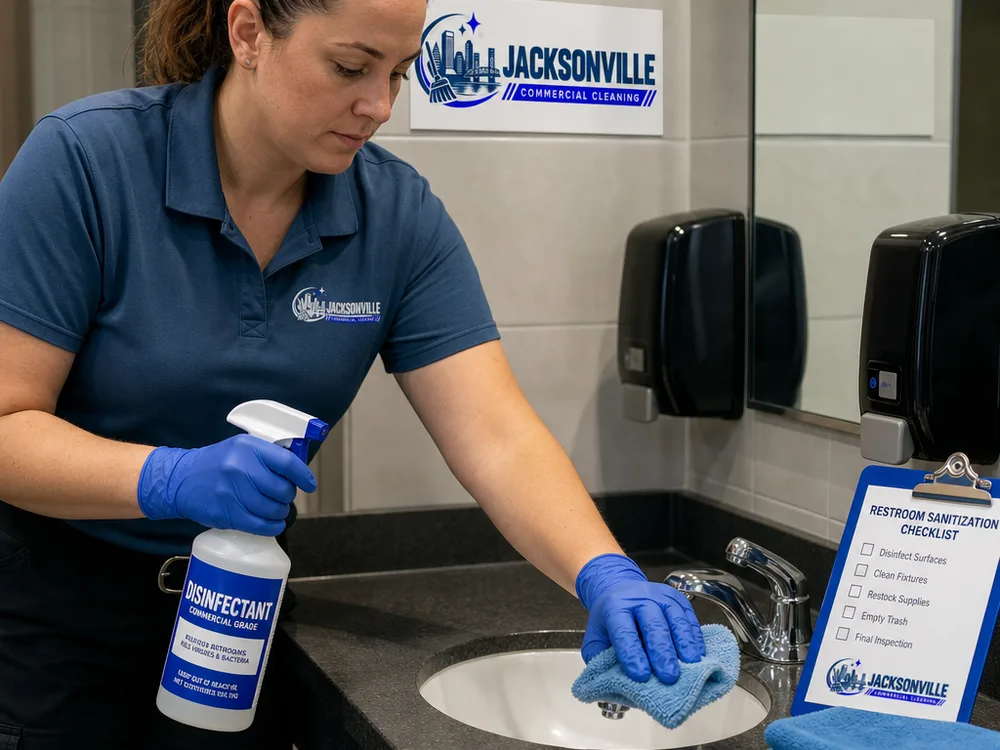
Cleaner sanitizing a commercial restroom with labeled disinfectant, color-coded microfiber cloths, and a checklist
Island, port and downtown

Commercial Cleaning in Fernandina Beach FL

Fernandina Beach runs three economies at once: a working industrial waterfront, a historic downtown and island resort hospitality. Each needs a different standard from the same provider.

✓Amelia Island coverage
✓Downtown and resort work
✓Industrial facility experience
✓Nassau County routes
Three standards, one city

Cleaning across a mixed local economy

Few places this size ask for such different work. Fernandina Beach has industrial facilities and a working port at one end of town, a historic downtown of small retail and restaurants in the middle, and resort and hospitality property along the island's coast, and a crew that treats all three the same will underperform in each.

The practical consequence is that scope matters more than routine here. Industrial space needs slab work, dust control and degreasing on an operational schedule. Downtown storefronts need careful methods for older buildings and glass kept sharp for walk-in traffic. Resort and hospitality property needs a presentation standard held continuously, because guests paying island rates notice what visitors elsewhere overlook. One provider can cover all three, but only by writing three genuinely different scopes.

Island conditions sit underneath all of it, with salt air working on glass, frames and hardware every month of the year. That applies as much to an industrial door as to a downtown shopfront, which is why exposure is recorded area by area.

Request a Callback
Across the island

What we clean in Fernandina Beach

What this covers in practice, from downtown retail and galleries, restaurants and waterfront dining through the rest of the list below, each with the detail that matters on site.

Request a Callback

Downtown retail and galleries

Storefronts and galleries in the historic downtown need entry glass, original flooring and restrooms handled with methods matched to older materials. Walk-in traffic makes glass and entrance floors the surfaces that decide first impressions.
Restaurants and waterfront dining

Indoor seating areas, bar surfaces, restrooms and kitchen floors are serviced overnight, with outdoor and waterfront seating included since those surfaces take salt, weather and heavy seasonal use continuously.

Resort and hospitality space

Lobbies, corridors, meeting and event space, restrooms and common areas need a presentation standard maintained every day rather than recovered before arrivals. Guests at island properties examine detail closely.

Industrial and port facilities

Industrial buildings and facilities near the waterfront need slab scrubbing, dust control, dock and entrance degreasing, plus restrooms and break rooms timed around shifts. Site safety rules govern how and when crews work.

Offices and medical suites

Professional and clinical suites across the island follow recurring routines, with clinical boundaries recorded from your own protocols and extra attention where salt and humidity affect entrances and restroom grout.

Marine and workshop businesses

Boatyards, workshops and marine-related businesses carry a mix of industrial soil and salt exposure. Floors, workshop areas, customer-facing space and restrooms each get their own frequency within a single scope.

One contract, three standards

How a mixed island scope is written

Rather than one standard applied everywhere, the scope sets a standard per area and prices each accordingly. Industrial zones get operational frequencies and equipment-based tasks, customer-facing space gets presentation frequencies with glass and floor detail, and shared areas like restrooms and break rooms sit on whichever cycle their use demands.

For a business spanning both kinds of space, the transition between them gets planned deliberately rather than left to chance, since the threshold and corridor joining them is exactly where industrial soil reaches customer-facing areas.

Salt exposure is then written in as a standing factor across every area, raising how often glass, frames, hardware and entrance flooring need attention when compared with an equivalent inland building of the same size and the same use.

Request a Callback
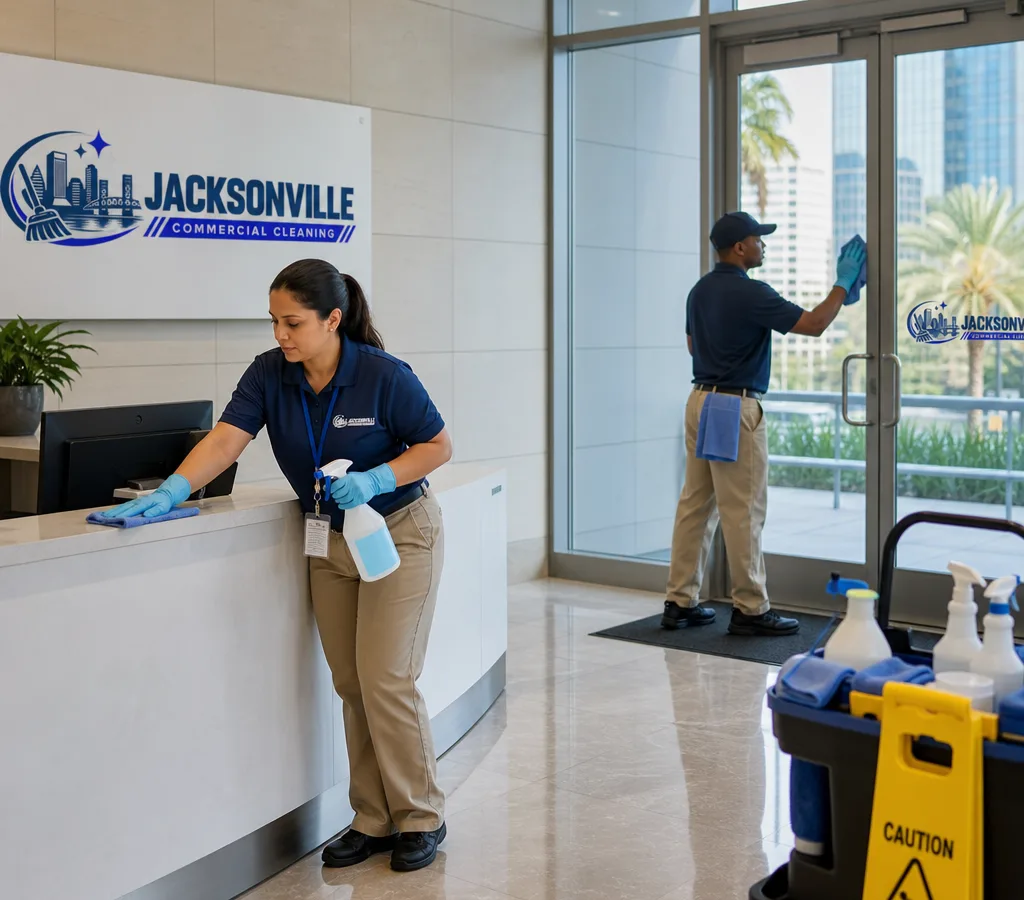
Early-morning commercial cleaning crew disinfecting lobby touchpoints in a Jacksonville office building
Reading a mixed site

Starting service on Amelia Island

What this covers in practice, from separate the areas by standard, record materials and exposure through the rest of the list below, each with the detail that matters on site.

Request a Callback
01

Separate the areas by standard

The walkthrough divides the property into industrial, customer-facing and shared space, recording what each needs. Treating a mixed building as a single environment is the usual reason a previous arrangement disappointed.

02

Record materials and exposure

Surfaces are identified along with how exposed each area is to salt and weather. Downtown buildings add original materials to that record, and industrial zones add soil sources and drainage.

03

Fit the operating calendar

Industrial shifts, downtown trading hours and hospitality arrival patterns all constrain access differently. Your schedule records which areas are worked at which hours, rather than assuming a single window suits the whole property.

04

Reset each area properly

Opening passes differ by area: slab and degreasing work industrially, glass and floor restoration in customer space. Each starts from its own baseline so later visits maintain rather than chase.

05

Review by season and shift

Visitor season affects downtown and resort property while industrial volume follows its own calendar, so the plan is reviewed against both rather than a single annual pattern.

Nassau County reach

Fernandina Beach and Amelia Island

Coverage runs across Amelia Island, taking in the historic downtown and its retail and restaurant streets, the resort and hospitality property along the coast, professional and medical offices through the city, and the industrial and port-related facilities toward the waterfront. Nassau County on the mainland side is served on the same routes, including Yulee and the commercial development along the approach to the island.

Position on the island changes exposure noticeably over short distances. Oceanfront property needs shorter glass and hardware cycles than downtown buildings set back from the water behind other structures and mature trees.

Businesses with island sites and others in Jacksonville can run them under a single scope with one point of contact, since both are served from the same base.

Pricing mixed-use property

Commercial cleaning costs in Fernandina Beach

A mixed property is quoted by area rather than as a single rate, because industrial space and customer-facing space carry different labor and equipment. Floor area, surface types, restroom count, glass quantity and the frequency each zone needs all feed the figure.

It then moves with salt exposure and the glass cycle that follows, seasonal frequency changes for downtown and hospitality space, whether periodic slab or floor restoration is attached, and any site safety requirements that add time. A walkthrough of each area sets it.

Request a Callback
Island logistics questions

Amelia Island cleaning questions

Answers to what buildings ask before they arrange a walkthrough, covering scope, scheduling and how the work gets checked.

Do you service the island reliably?

Yes, on planned Nassau County routes rather than as occasional trips. Island access adds drive time, which is built into the routing with enough crew depth that a single absence does not strand the account. Your window goes into the agreement in writing for that reason.

Can one provider handle industrial and downtown work?

It can, provided the scope is written as separate standards rather than one routine stretched across both. Industrial areas get operational frequencies and equipment-based tasks, customer-facing space gets presentation frequencies. Problems arise when a provider applies a single checklist to a mixed property.

How bad is the salt exposure here?

Enough to change the plan. Glass holds a film that needs removing rather than smearing, door hardware and window frames corrode faster, and entrance flooring takes salt alongside sand. Oceanfront property needs noticeably shorter cycles than downtown buildings shielded behind others.

Do you work around the visitor season?

Downtown retail and hospitality both swing with visitors, so two frequencies and a switch date are agreed in advance. Industrial facilities usually follow their own volume pattern instead, which is why a mixed property gets reviewed against both calendars.

What about older downtown buildings?

They get a material inventory and method matched to what is actually underfoot, with testing in an inconspicuous spot where a surface is uncertain. Original wood, worn tile and aged grout all need gentler handling than a modern floor, documented so the approach stays consistent.

Can you cover sites on the mainland too?

Yes, Yulee and the wider Nassau County commercial areas sit on the same routes, as does Jacksonville. A business with an island location and a mainland one can keep a single scope, one contact and consistent standards across both.

Walk your island property

Show us each kind of space the property contains. We will separate them by standard, record the exposure and materials, and quote each area on what it genuinely needs.

Request a quote

Tell us about your facility

Send the building type, the areas that matter most and your preferred service window, and we will follow up to arrange a walkthrough.