
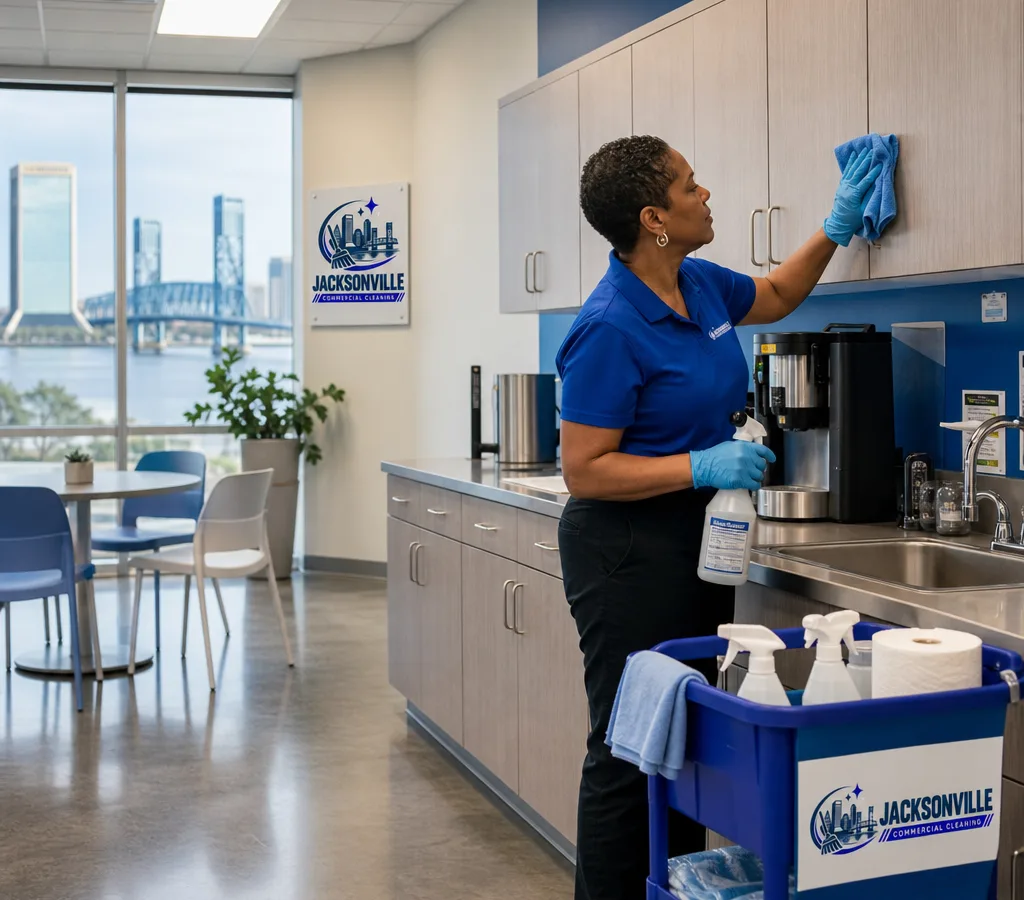
Commercial cleaner performing a detailed deep clean in a Jacksonville office breakroom
Old buildings, constant visitors

Commercial Cleaning in St. Augustine FL

St. Augustine businesses deal with two things at once: buildings old enough to need careful handling, and visitor traffic that never really stops. The method has to respect both.

✓Historic district experience
✓Gentle surface methods
✓Visitor traffic volume
✓Narrow access planning
Age changes the method

Cleaning historic commercial buildings

Older commercial buildings do not tolerate a modern cleaning routine applied without thought. Original wood, worn terrazzo, unsealed tile, soft masonry, aged grout and antique fittings each respond differently to water, chemistry and machine pressure, and a method that is perfectly safe in a recent build can permanently mark any of them.

Visitor volume then applies pressure that the building was never designed for. Floors in a St. Augustine storefront take traffic counts closer to a mall corridor than a small shop, entry glass is touched constantly, and restrooms serving visitors deteriorate through a day rather than across a week. The combination is what makes this work particular: heavy use in buildings that need gentle treatment, which rules out both the aggressive approach and the light one.

Access adds its own constraint on top of that, with narrow streets, limited parking and pedestrian volume all shaping when a crew can realistically reach a building and work in it without getting in anyone's way. In the district, logistics often decide the schedule before cleaning does.

Request a Callback
Businesses in the district

What we clean in St. Augustine

What this covers in practice, from historic district retail, restaurants and bar spaces through the rest of the list below, each with the detail that matters on site.

Request a Callback

Historic district retail

Storefronts in older buildings need entry glass, original flooring and restrooms handled with methods matched to the materials. Wood, worn tile and aged grout all get a gentler approach than a modern floor would, documented in the scope so it stays consistent.
Restaurants and bar spaces

Interior dining areas, bars, restrooms and kitchen floors are serviced overnight. Many kitchens here sit in converted space with original flooring and awkward layouts, so degreasing method and equipment choice are decided on site rather than by default.

Hospitality and guest areas

Lobbies, guest corridors, meeting space, restrooms and common areas in smaller hospitality properties need presentation maintained continuously, since visitors are arriving year-round. Work fits around check-in and check-out patterns.

Galleries and display space

Galleries and display rooms need dust control that does not disturb what is on the walls, careful floor work and glass attention, with clear agreement on what crews do not touch. Those boundaries are recorded before service starts.

Offices in converted buildings

Professional suites, many of them in converted older buildings, get recurring work on restrooms, break areas, glass and flooring, with the method matched to whatever original material survives underfoot.

Visitor restroom upkeep

Restrooms serving visitor traffic deteriorate within hours rather than days. Frequent attention, grout work and restocking keep them from becoming the detail a visitor remembers and mentions in a review.

Materials come first

How scope works in older buildings

A scope here opens with a material inventory rather than a task list. Each floor, surface and fitting is identified, its condition noted, and the method and chemistry that suit it recorded so the approach does not vary with whoever is on shift. Anything already damaged is documented before work starts.

Frequency then follows visitor load rather than floor area. Entry glass, restrooms and traffic lanes often need attention several times across a busy day, while storage and staff areas the public never enters run on a much lighter cycle.

Access is written in too: which door a crew uses, where a vehicle can stop, what the street allows at what hour, and how an event or a festival weekend changes the plan for those particular days. Those details constrain the schedule more than the task list does.

Request a Callback
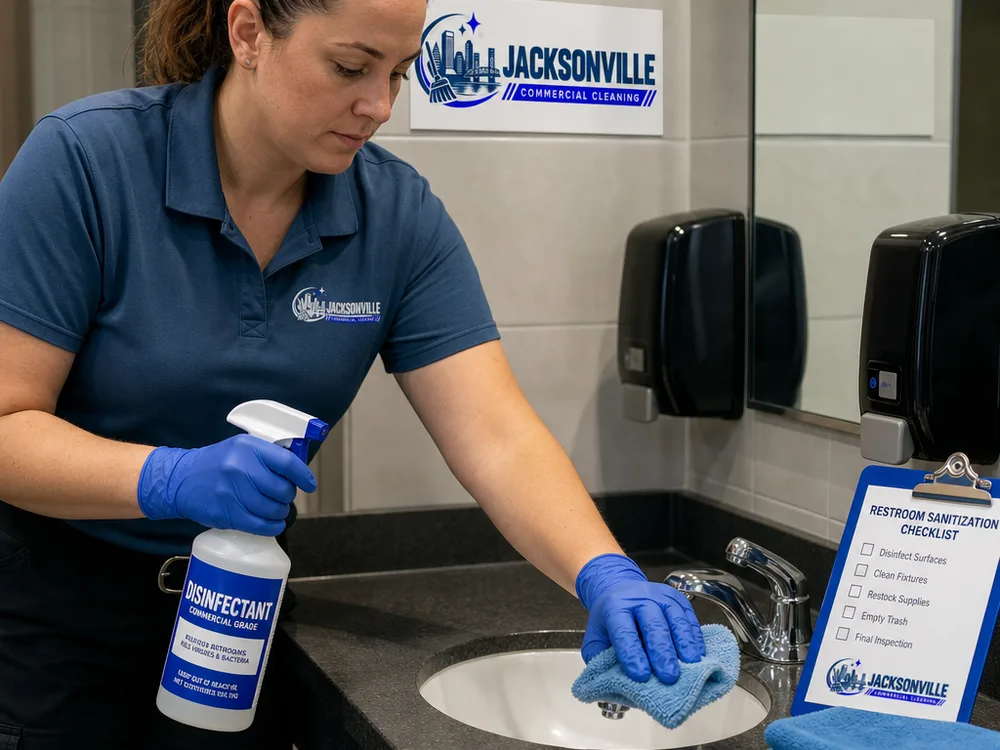
Cleaner sanitizing a commercial restroom with labeled disinfectant, color-coded microfiber cloths, and a checklist
Careful from the start

Beginning service in St. Augustine

What this covers in practice, from inventory the materials, test before committing through the rest of the list below, each with the detail that matters on site.

Request a Callback
01

Inventory the materials

Every floor type, surface and fitting is identified and its condition recorded, including existing damage, worn finish and anything already failing. That record protects both parties and decides the method for each area.

02

Test before committing

Where a surface is uncertain, method and chemistry are tried in an inconspicuous spot and checked before being used across a room. Testing costs minutes; marking an original floor cannot be undone.

03

Solve the access question

Parking, street access, which entrance works and the hours a crew can realistically reach the building are settled early, since in the district these constrain the schedule more than the work itself does.

04

Match frequency to visitors

Cycles are set against actual visitor load rather than floor area, which usually means more attention on glass, restrooms and traffic lanes and less on areas the public never enters.

05

Watch the busy calendar

Events, holidays and the heaviest visitor weeks get looked at ahead of time, with extra coverage agreed for defined stretches instead of leaving a building short when it is busiest.

City and St. Johns County

Where we serve around St. Augustine

Coverage here takes in the historic district and its retail and restaurant streets, the commercial corridors outside the old town, professional and medical offices through the city, and hospitality properties on both sides of the water. St. Johns County beyond the city is served on the same routes, with St. Augustine Beach and the A1A corridor reached alongside.

Building age varies more here than almost anywhere. A storefront in the old town and a suite in a newer commercial development need different methods, different equipment and different expectations about what can be restored.

Companies with sites here and in Jacksonville can hold a single scope across both, since the city and St. Johns County are served from the same base and the same routes.

Condition and care

Commercial cleaning costs in St. Augustine

Quotes here follow floor area, surface types and condition, restroom count, glass quantity and the frequency visitor traffic demands. Older buildings often carry more labor for the same area, because careful methods and detail work around original materials take longer than a modern floor does.

From there the figure follows how much attention restrooms and glass need through the busy season, whether event coverage is included, access and parking constraints, and any restorative work the material inventory turns up. A visit confirms it.

Request a Callback
What owners get wrong

St. Augustine cleaning questions

Answers to what buildings ask before they arrange a walkthrough, covering scope, scheduling and how the work gets checked.

Will cleaning damage our original floors?

Not when the method matches the material, which is exactly why the scope starts with a material inventory and testing in an inconspicuous spot. Original wood, soft masonry, unsealed tile and aged grout each have treatments that are safe and treatments that cause permanent marking, and the difference is documented rather than left to judgment.

Can worn historic surfaces be restored?

Sometimes substantially, sometimes only improved. Soil sitting on a surface or in its pores usually comes away, while wear through a finish, dye loss and decades of patina do not reverse with cleaning. After the first assessment we say which areas will visibly improve and which have reached their limit.

How do you handle the visitor season?

By raising frequency where visitors actually make contact: entry glass, restrooms and traffic lanes, often more than once a day through the busiest stretches. Back-of-house areas stay on a lighter cycle, which keeps the added cost tied to the places it earns its keep.

Is parking and access a problem for crews?

It is a real constraint in the district, which is why it goes in the scope. Which entrance to use, where a vehicle can stop, the hours the street allows and how an event changes the plan are all settled up front rather than discovered by a crew at the curb.

Do you work around our opening hours?

Yes, and in the district that usually means early morning or after close, because daytime work competes with visitors in a confined space. Hospitality properties often prefer mid-morning for common areas, scheduled around their own arrival patterns.

What about restrooms with old plumbing and tile?

Older restrooms need frequent, careful attention rather than aggressive treatment: descaling suited to the fittings, grout work that does not erode what is left of it, and drying to keep humidity from doing further damage. Where a fitting is failing, we flag it as maintenance instead of scrubbing harder.

Assess your building with us

Show us the space and whatever original material it still has. We will inventory the surfaces, test where needed and set frequencies that match your visitor traffic.

Request a quote

Tell us about your facility

Send the building type, the areas that matter most and your preferred service window, and we will follow up to arrange a walkthrough.