Commercial cleaner performing a detailed deep clean in a Jacksonville office breakroom
Clean between the bells

School and Daycare Cleaning in Jacksonville FL

Children touch everything at their own height, and a school building shows it. We clean classrooms, cafeterias, restrooms and the surfaces hands actually reach, working around the bells and the term calendar.

✓Touchpoint focus
✓Term break resets
✓After-dismissal windows
✓Restroom frequency
Buildings used hard daily

Cleaning schools around the school day

A school building absorbs more contact per square yard than almost any other commercial property. Door edges, chair backs, table undersides, handrails at child height, sink taps and the lower portion of every wall take hundreds of hands a day, and illness moves through a facility along exactly those surfaces.

Cleaning it well is largely a question of reaching the right things often enough. A crew that works adult sightlines will miss the band of surfaces between knee and shoulder height where children actually make contact, and a routine built on appearance alone will leave the touchpoints that matter most looking fine and feeling otherwise. Frequency on those surfaces earns more than any amount of attention paid to the obvious ones.

The academic calendar shapes everything else about the plan. Term time allows only short daily windows between dismissal and evening activities, while published breaks open the whole building up for floor refinishing and the heavier work that cannot happen otherwise.

Request a Callback
Where hands land

What school and daycare cleaning covers

What this covers in practice, from classrooms at child height, cafeterias and serving areas through the rest of the list below, each with the detail that matters on site.

Request a Callback

Classrooms at child height

Desks, table undersides, chair backs, cubbies, light switches, door edges and the lower wall band get worked rather than wiped past. Cleaning the surfaces children actually contact matters far more in a classroom than polishing the ones adults notice.

Cafeterias and serving areas

Tables, bench seating, tray rails, serving counters and the floor beneath every seat carry spilled food and sticky residue daily. Fast turnaround between sittings and a thorough reset afterward keep a cafeteria from holding odor into the next morning.

Restrooms on a tight cycle

School restrooms take concentrated use in short bursts around breaks, so condition deteriorates quickly and complaints follow. Fixtures, partitions, floors, grout, dispensers and restocking need a frequency matched to the bell schedule rather than a single daily visit.

Corridors, stairs and entrances

Handrails, stair treads, locker banks, entrance mats and corridor flooring see the whole school in a few minutes. Dust control, edge work and attention to rails at the heights children use keep traffic routes both presentable and sensible.

Early years and activity rooms

Rooms for younger children involve floor-level play, soft furnishings and shared resources, so surfaces close to the ground and the items that pass between hands take priority. Product choice in these rooms follows your own policy.

Gyms and activity surfaces

Gym floors, mats, bleacher seating and equipment surrounds collect dust, scuffing and perspiration residue. The method matches the floor so the surface keeps its traction, and seating is cleared of debris that gathers underneath it.

Calendar sets the shape

Building a school cleaning scope

A school scope divides into daily work during term, periodic work across the year, and heavier resets during breaks. Daily tasks cover classrooms, restrooms, cafeterias, corridors and touchpoints. Periodic work takes high dusting, vents, light fixtures and detail cleaning. Break periods carry floor refinishing, carpet extraction and the deep work that cannot happen with students present.

Frequency on restrooms and touchpoints is the single decision that matters most in a school, and it should follow the bell schedule and your enrollment rather than square footage, which tells you very little about contact volume.

Safety arrangements belong in the same document: the screening expectations your district or center sets, visitor procedures, how crews are identified to staff, and whether any work happens with students in the building at all.

Request a Callback
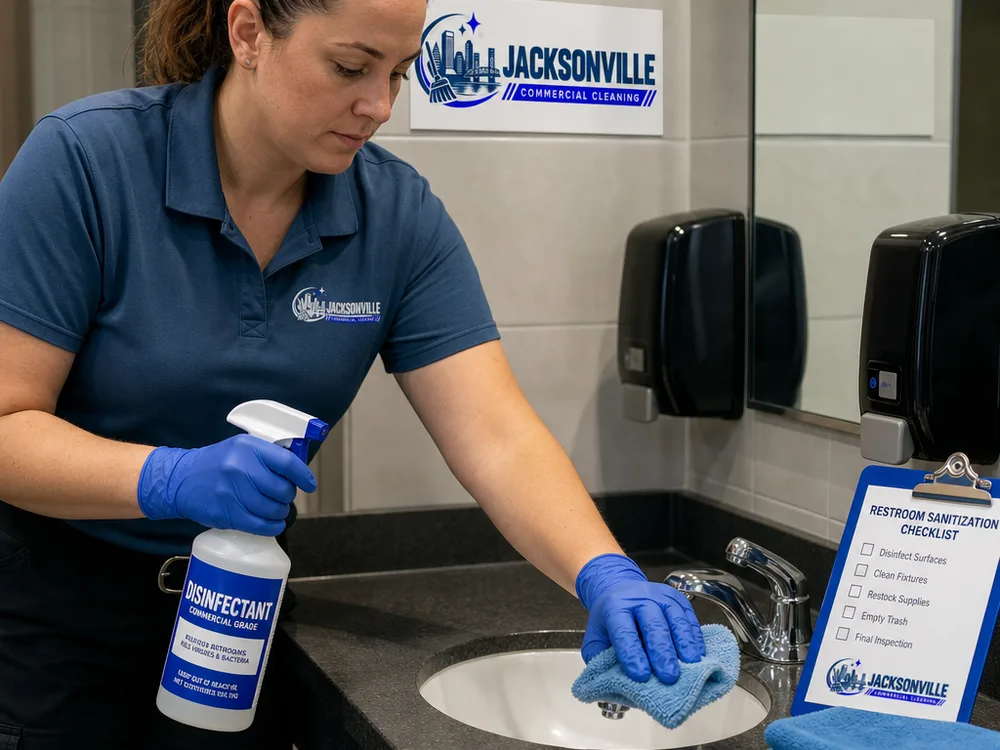
Cleaner sanitizing a commercial restroom with labeled disinfectant, color-coded microfiber cloths, and a checklist
Onboarding a school

How school cleaning service starts

What this covers in practice, from walk during a school day, confirm safeguarding arrangements through the rest of the list below, each with the detail that matters on site.

Request a Callback
01

Walk during a school day

Seeing the building while it is in use shows where traffic concentrates, how quickly restrooms turn over and which surfaces take real contact. An empty building after dismissal hides all of that.

02

Confirm safeguarding arrangements

Screening expectations, identification, sign-in procedures, which areas crews may enter and whether any work happens while students are present are settled with your administration before a schedule exists.

03

Map the daily window

Dismissal, after-school programs, athletics, evening use and custodial staffing all compress the time available. The plan names what happens in that window and what moves to a longer cycle because it will not fit.

04

Plan the break calendar

Floor refinishing, carpet work, high dusting and deep resets are booked against the published term calendar well ahead, since those dates are fixed and the work cannot move into term time.

05

Check frequency against illness

Touchpoint and restroom frequency gets reviewed through the year, particularly across the months when absence climbs. Adjusting the cycle is more effective than changing products when illness is moving through a building.

Campuses we reach

School cleaning across Jacksonville

Private schools, daycare centers and learning facilities sit throughout Mandarin, Arlington, the Southside and Baymeadows, which is where most of this work happens. Riverside and San Marco bring older campuses with original flooring and tall windows, the Northside and Orange Park bring suburban centers and church-affiliated programs, Downtown adds training facilities, and Jacksonville Beach brings small centers where sand is a daily factor.

Facility age drives the method here too. An older campus often has wood, terrazzo or aging tile that needs a gentler approach and different products than a recent build with modern resilient flooring throughout.

Campuses needing floors refinished across a break can book that work through our floor care services, planned against the published term calendar well in advance.

What shapes the estimate

What school and daycare cleaning costs

Estimates for a school follow classroom count, restroom count, cafeteria and gym space, total area and the frequency your touchpoint and restroom cycle needs. Enrollment matters more than floor area, because contact volume rather than size drives the workload.

The final figure also depends on how tight the daily window is, whether any work happens while students are present, your screening requirements, the floor types involved, and which break periods carry deep work. A walkthrough during a school day sets it.

Request a Callback
What families notice

School cleaning questions from administrators

Answers to what buildings ask before they arrange a walkthrough, covering scope, scheduling and how the work gets checked.

How do you reduce illness spreading through a school?

By reaching the right surfaces often enough. Door edges, handrails at child height, desk and table surfaces, chair backs, switches and sink fittings carry most transmission, and frequency on those matters more than product choice. During months when absence climbs, raising the touchpoint cycle is the single most useful adjustment available.

Can you work while students are in the building?

That is your decision and it goes in the scope. Many schools prefer all work after dismissal, with only restroom and spill coverage during the day. Where daytime work is permitted, the plan names which areas crews may enter and how they are identified to staff.

What about background checks for your crews?

Your district or center sets that requirement and we work to it, with the arrangement recorded during onboarding alongside identification and sign-in procedures. Schools generally want this settled before anything about cleaning is discussed, which is the right order.

How do you handle cafeteria turnaround?

Short resets between sittings cover tables, benches and the floor beneath them, followed by a fuller clean after the last sitting. Spilled food left under seating is what produces odor the next morning, so the floor under the furniture gets as much attention as the table tops.

When does the deep cleaning happen?

During published breaks, booked well ahead because those dates do not move. Floor stripping and refinishing, carpet extraction, high dusting and detail work all need the building empty and enough days for floors to cure before students return.

Do you supply paper products and soap?

Either arrangement works and the scope records which. Some facilities prefer to buy consumables and have crews restock them, others want supply managed entirely by us. What matters is that restocking is written into the routine, since an empty dispenser generates complaints faster than almost anything else.

Plan around your calendar

Share your term calendar, enrollment and daily windows. We will walk the campus while it is in use, set a touchpoint frequency that fits the bells and book the heavy work into your breaks.

Request a quote

Tell us about your facility

Send the building type, the areas that matter most and your preferred service window, and we will follow up to arrange a walkthrough.