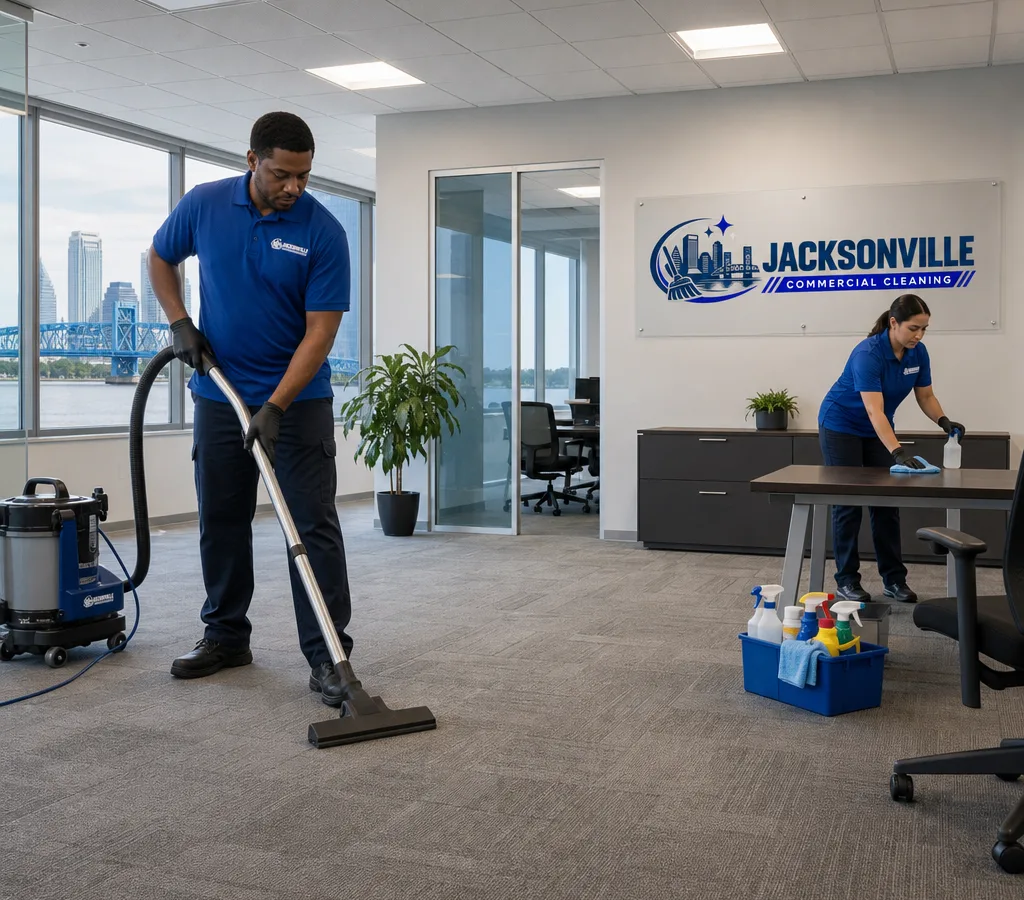
Commercial cleaners vacuuming and wiping high-touch surfaces in a modern Jacksonville office suite
Handover ready, dust included

Post-Construction Cleaning Services in Jacksonville FL

Construction dust keeps arriving after the last trade leaves. We clean new builds and renovations in staged passes, so the space is ready for inspection, for furniture and for the people who will use it.

✓Staged dust passes
✓Punch-list detail work
✓Trade-schedule coordination
✓Handover standard checklist
Dust works on a timeline

Cleaning a build to handover condition

Drywall dust is the finest material on a job site and the slowest to settle. It migrates into light coves, door tops, elevator tracks, duct registers and the inside of cabinets, then falls again every time a door swings or a blower starts. Cleaning once, early, almost never holds.

Staging the work against the construction schedule is what fixes that. A rough clean clears debris so trades can finish safely, a final clean takes the building to presentation condition, and a punch-list pass catches whatever the last repairs and sign-offs disturb on their way out. Each pass has a different purpose, a different task list and a different standard to hit.

General contractors, facility owners and tenants moving into finished space all judge the result differently. Agreeing early whose standard the final pass is written to, and what counts as finished in each area, prevents the argument that otherwise lands on handover day.

Request a Callback
Where new-build dirt hides

What a post-construction clean includes

What this covers in practice, from rough clean for trades, fine dust removal through the rest of the list below, each with the detail that matters on site.

Request a Callback

Rough clean for trades

Before finishes go in, a job needs floors swept, debris gathered, offcuts and packaging removed, and surfaces knocked down enough for the next trade to work cleanly. This pass is about access and safety rather than appearance, and it prevents damage to new material later.

Fine dust removal

Settled construction dust is vacuumed with filtration rather than pushed around, worked from ceilings down through walls, ledges, door frames and trim to the floor. Repeat passes are normal, because whatever is airborne at the start of a shift lands by the end of it.

Glass, labels and frames

New glass arrives wearing manufacturer stickers, grease pencil marks, mortar splash and overspray. Labels come off, frames and tracks are cleared of grit, and interior glass and partitions are finished so the first impression is not a smeared storefront.

Floor finish preparation

Protective covering comes up, adhesive residue and plaster specks come off, and each floor type gets what it needs: grout haze lifted from tile, scuffing taken off new resilient tile, and a first clean on carpet before any furniture lands on it.

Registers, filters and vents

Ductwork is where construction dust keeps its reserves. Registers are pulled and cleaned, grille faces and reachable duct interiors are vacuumed, and filters are flagged for replacement so the HVAC system stops redistributing the job site after handover.

Restroom and kitchen commissioning

Fixtures, mirrors, dispensers, cabinet interiors and appliance surfaces are cleared of dust, caulk smears, adhesive and protective film. Drains and strainers get checked for debris, since grout and joint compound settle into them during the build.

Phases, not one visit

How post-construction scope is organized

Scope follows the phase of the build. Rough cleaning prices on debris volume and site access. Final cleaning prices on finish sensitivity and the standard the handover has to meet. A punch-list pass is usually smaller and scheduled late, once inspections, repairs and touch-up paint are all behind you.

Setting that out early heads off the usual argument about who cleans what. During the walk we agree which trades remove their own waste, where the dumpster sits, when water and power are live for cleaning use, and who signs each phase off.

Access details go in the same document: elevator availability, parking for equipment, badge or gate procedures, and what the close-out checklist expects at each sign-off. Those are the items that stall a pass once a crew is already on site.

Request a Callback
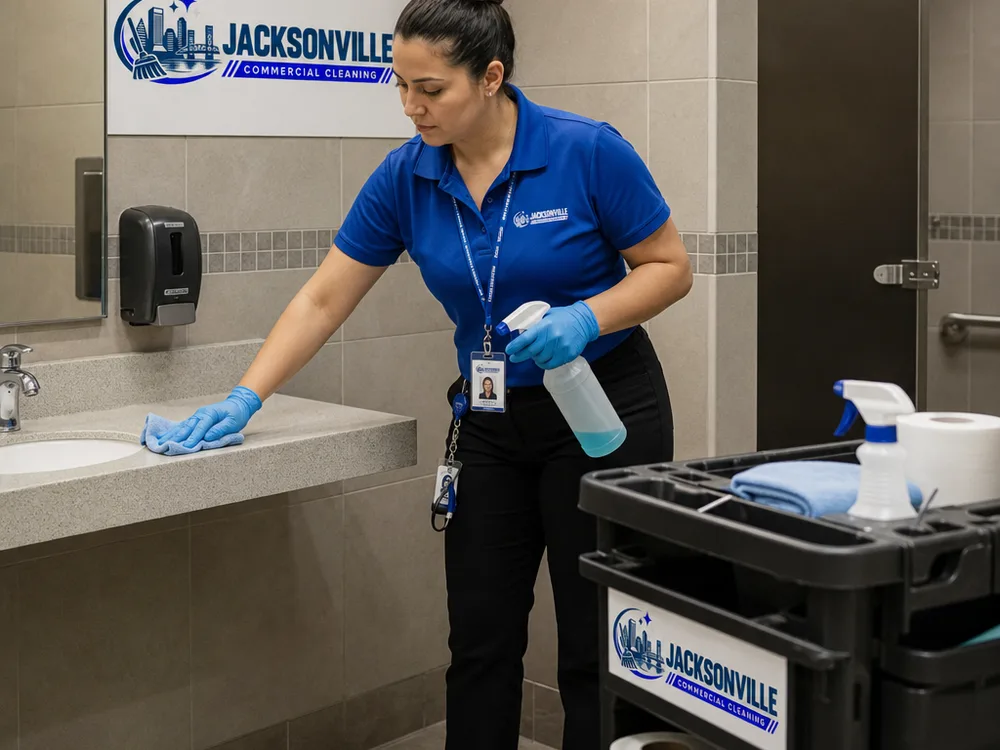
Technician disinfecting fixtures and restocking supplies in a commercial restroom
Working with the build

How we schedule against your build

What this covers in practice, from site visit with the superintendent, phase plan and dates through the rest of the list below, each with the detail that matters on site.

Request a Callback
01

Site visit with the superintendent

Whoever runs the job walks the space with us, points out what is finished, what is coming, and which materials are fragile. Access, power, water, dumpster location and elevator availability get confirmed in the same visit.

02

Phase plan and dates

Dates attach to construction milestones instead of the calendar, because a build moves. Every phase gets its own task list, and the plan names who is notified when a trade slips and the sequence has to shift behind it.

03

Debris and rough pass

Early work clears whatever blocks progress: packaging, offcuts, dried compound, stickers on anything that will be awkward to reach later. Protective coverings are checked and replaced where finishes still need them.

04

Final detail by zone

Zone by zone, surfaces are taken from ceiling height down to the floor and signed off before a crew moves on. Completed areas are closed off where that is possible, so traffic from remaining work does not undo them.

05

Punch-list return visit

Once inspections and touch-ups are done, a last pass handles the dust those repairs created: sanding residue, paint flecks, fingerprints on glass, footprints on new flooring. The building is handed over ready for furniture.

Build sites we reach

Post-construction cleaning near Jacksonville

New construction and tenant improvement work keeps us Downtown and in the Southside and Baymeadows office corridors, with retail and restaurant build-outs in San Marco, Riverside and around Jacksonville Beach. Renovations in Mandarin and Arlington often mean an occupied building where one suite is under work while the neighbors keep trading, and Northside and Orange Park bring warehouse and shell completions.

An occupied building changes the method. Corridors, elevators and shared restrooms used by tenants get cleaned on the way in and out, and containment at the suite door matters more than anything happening inside it.

Spaces handed to a tenant who wants the cleaning to carry on can move straight onto a recurring janitorial schedule, usually with the same crew that finished the build.

What the estimate rests on

What post-construction cleaning costs here

Estimates rest on the phase, the finished area, and how delicate the finishes are. Debris volume drives the rough pass, while dust load, glass area, ductwork and cabinet interiors drive the final pass, and the punch-list return is scoped separately because it is smaller.

The final number then depends on the conditions around it: a compressed handover date, limited elevator or dock access, trades still working alongside the crew, and the standard a client walk-through will be judged against. A site walk against the phase plan produces the figure.

Request a Callback
Questions from general contractors

Post-construction cleaning questions

Answers to what buildings ask before they arrange a walkthrough, covering scope, scheduling and how the work gets checked.

What is the difference between a rough clean and a final clean?

A rough clean happens mid-build to clear debris and let trades work safely on a tidy site, so appearance is secondary. A final clean takes the finished space to presentation condition: fine dust off every surface, glass and frames detailed, floors treated, fixtures polished. Most projects use both, plus a punch-list pass at the end.

When should we book the final clean?

After the last dust-producing trade finishes and before furniture, equipment or tenants arrive. Booking it while sanding, cutting or spray work continues wastes the pass, because the surfaces you paid to clean are coated again within hours. On a moving build, a provisional date with a short confirmation window works best.

Do you remove construction debris?

Gathering and removing debris belongs to the rough clean, within what the site's dumpster and access allow. Heavy material, hazardous waste and anything a trade is contractually holding gets confirmed during the walk, so the volume in your estimate matches what actually leaves the site.

Can you work around trades still on site?

Yes, and on a tenant improvement that is normal. Crews take the zones that have been released, work around live trades, and return to anything disturbed afterward. Sequencing is agreed with the superintendent each visit, so two crews are not competing for the same room or the same outlet.

Why does dust keep appearing after cleaning?

Because construction dust stays airborne for hours and hides wherever air moves: duct registers, light fixtures, door tops, elevator rails, cabinet interiors. Run the HVAC or swing a few doors and it redistributes. Staged passes, plus attention to those reservoirs, are what break the cycle.

Will the space be ready for inspection or a client walk-through?

That is the standard the final pass is written to. Expect questions about what the walk-through has to show: whether labels must all be gone, whether floors need to hold up under bright light, and which areas the client will actually enter. The checklist is built from those answers and verified beforehand.
Plan your close-out clean

Send the project type, the finished area and the dates you are working toward. Our crew will walk the site, map the phases onto your schedule, and quote each pass against the handover standard you have to meet.

Request a quote

Tell us about your facility

Send the building type, the areas that matter most and your preferred service window, and we will follow up to arrange a walkthrough.