

Technician detail-cleaning baseboards and door frames in a commercial hallway
Scale measured in acres

Warehouse and Distribution Cleaning Jacksonville

Distribution buildings are measured in acres of slab and miles of racking. We clean them on the gaps in your shipping schedule, working the floor, the overheads and the dock without stopping the operation.

✓Acres of slab
✓Racking dust removal
✓Dock area degreasing
✓Shipping schedule fit
Volume changes the method

Cleaning distribution buildings at scale

Scale is what makes a distribution building different. The same soil that a small warehouse handles with a push broom becomes a genuine equipment and planning problem across several hundred thousand square feet, and the floor is in continuous use by machinery that cannot wait for a crew.

Cardboard is the main culprit. Every carton handled sheds fiber, and that fiber becomes the dust that coats racking beams, settles on inventory and reduces visibility under the lighting. Add tire residue from lift traffic, shrink wrap debris, pallet splinters and the heavier soil at the dock, and the result is a building where cleaning has to be sequenced rather than simply performed.

Humidity adds real weight to overhead dust in this climate, which makes it cling to steel and then fall in clumps onto inventory rather than drifting down evenly where a crew can anticipate it. That is why overhead work has to come before any floor pass.

Request a Callback
Floor, racks and dock

What warehouse cleaning covers

What this covers in practice, from slab scrubbing at scale, racking and overhead dust through the rest of the list below, each with the detail that matters on site.

Request a Callback

Slab scrubbing at scale

Ride-on scrubbing covers large floor areas in planned lanes so aisles stay usable, pulling tire marks, cardboard dust and spill residue from the concrete. Sequencing by zone matters as much as the machine, since a closed aisle stops picking.
Racking and overhead dust

Cardboard fiber settles on beams, uprights, joists, conduit and light fixtures until airflow drops it onto inventory. Removal works downward in a controlled order with capture, because dislodging dust without containing it simply relocates the problem onto product.

Dock and staging zones

Dock plates, levelers, trailer aprons, staging lanes and compactor surrounds carry the heaviest soil and the most traffic. Degreasing, edge detail and attention to door tracks keep that soil from being carried deeper into the building on tires and pallets.

Aisle and pick path upkeep

Pick faces, cross aisles and the lanes equipment uses constantly need more frequent attention than storage areas that rarely see traffic. Targeting the active paths gives a visibly cleaner building for considerably fewer hours than treating everything equally.

Break rooms and restrooms

Facilities serving shift workers take concentrated use in short windows. Restrooms, lunchrooms, lockers, vending surrounds and floors need a frequency and a timing that respects shift changes, since a closed restroom at break is an immediate problem.

Office and shipping core

Administrative space, the shipping desk, driver check-in and any customer-facing entrance get a presentation standard rather than an industrial one. These are the only parts of the building most visitors see.

Sequenced by zone

How warehouse scope is structured

Scope divides by zone and frequency rather than by task alone. Active pick paths, dock areas, restrooms and office space carry recurring attention. Storage aisles, racking, overheads and the full slab run on longer cycles that are scheduled against inventory movement and whatever downtime exists.

Mapping those zones honestly is the real work in planning a building this size. Which aisles stay busy, where inventory sits untouched for months, which dock doors run constantly and where equipment traffic concentrates all determine where the hours belong.

Equipment logistics shape the plan just as much. Machine charging points, water fill and drain locations, dump sites and somewhere a scrubber can be staged without blocking a lane all get settled before the first visit rather than discovered during it.

Request a Callback
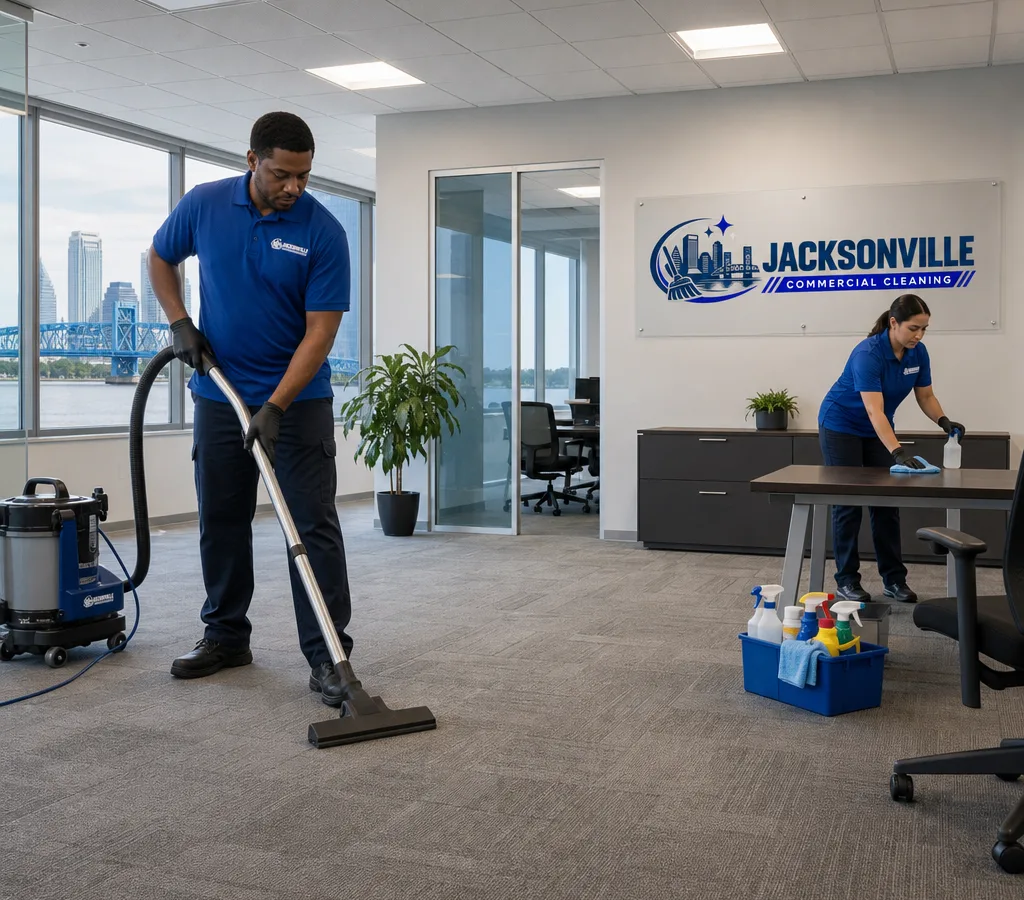
Commercial cleaners vacuuming and wiping high-touch surfaces in a modern Jacksonville office suite
Mapping before cleaning

How we start in a distribution center

What this covers in practice, from map zones with the operation, confirm equipment logistics through the rest of the list below, each with the detail that matters on site.

Request a Callback
01

Map zones with the operation

A supervisor walks the building with us to mark active pick paths, slow-moving storage, dock lanes, restricted areas and the spots that cause complaints. That map, rather than total area, decides where hours are spent.

02

Confirm equipment logistics

Charging points, water fill and dump locations, staging space for machines and the routes a scrubber can travel are established in advance. Discovering these gaps on a first visit costs an entire shift.

03

Lock the safety requirements

Traffic rules, high-visibility expectations, badge procedures, lift equipment protocols and the limits around racking and live equipment are documented. Your site rules override any sequence we would otherwise prefer.

04

Clear the overheads first

An opening program takes racking and overhead dust down before the slab receives its deep scrub, because reversing that order drops accumulated dust onto a floor that has just been cleaned.

05

Hold the cycle and verify

Zone cycles then run on schedule with supervisor verification against the map. Findings return to your contact, including anything belonging to maintenance rather than cleaning.

Distribution corridors we cover

Warehouse cleaning around Jacksonville

Most distribution space lies on the Northside, near the port and along the interstate corridors, which is where the bulk of this work sits. Westside industrial parks bring mid-size buildings and third-party logistics operations, Arlington and the Southside add smaller distribution and service warehousing, Downtown carries older multi-story buildings with freight elevators, and Orange Park brings contractor yards and light storage.

Building age changes what is actually achievable. Older warehouses often have unsealed or repeatedly patched slabs that take a different method entirely and will never hold the finish a modern poured floor does.

Operations that also want a nightly presence for offices, break rooms and restrooms can combine this with our janitorial services under a single coordinated schedule.

Area and access

What warehouse cleaning costs in Jacksonville

Pricing a distribution building rests on slab area, how much of it is racked or staged, ceiling height, the dust load your throughput creates, dock count and condition, and the frequency each zone needs. Open floor and heavily racked floor are not comparable, which is why zone mapping comes before any figure.

Where it lands depends on how much work happens during live operations rather than downtime, how much needs lift access, your safety and badge requirements, and whether the office core and restrooms join the same scope. Your operations supervisor walking it with us settles that.

Request a Callback
Scale and sequencing

Warehouse cleaning questions

Answers to what buildings ask before they arrange a walkthrough, covering scope, scheduling and how the work gets checked.

Can a building this size be cleaned without stopping work?

Yes, by sequencing rather than by closing areas. Aisles are worked in planned lanes, dock zones are taken between trailer movements, and offices and restrooms fit around shift changes. Full-slab scrubbing and anything needing lift access are the exceptions that want genuine downtime.

Where does all the dust come from?

The cardboard, overwhelmingly so. Every carton handled sheds fiber, which becomes the dust coating racking, inventory and light fixtures, with tire residue and shrink wrap debris adding to it. Knowing the source matters, because it means overhead cleaning has to be planned and periodic rather than occasional.

How often should racking be cleaned?

That depends on throughput and on what sits below. Buildings handling high carton volume, or storing open or food-grade product, need a considerably shorter cycle than a facility holding palletized goods in sealed packaging. The cycle is set from your volume and your product sensitivity.

Will cleaning the slab remove old stains?

Scrubbing lifts tire marks, dust film and most surface residue, and the floor improves substantially. Concrete is porous though, so oil and chemical spills that soaked in years ago can leave a permanent shadow. We tell you which marks will clear and which belong to the slab now.

Do you handle the dock and trailer areas?

Yes, and they usually need the most attention in the building. Dock plates, levelers, aprons, staging lanes and compactor surrounds take heavy soil that then travels inward on tires and pallets. Treating those zones properly reduces what arrives everywhere else.

Can one provider cover the warehouse and the offices?

That is generally simpler than running two vendors. Administrative space, restrooms and break rooms sit on a recurring frequency while slab, racking and dock zones run on their own cycles, all under a single scope with separate task lists so nothing is lost between them.

Map your building with us

Walk us through the active lanes, the dock and the quiet storage. We will map the zones, price them on what each actually needs, and build cycles that fit the gaps in your shipping schedule.

Request a quote

Tell us about your facility

Send the building type, the areas that matter most and your preferred service window, and we will follow up to arrange a walkthrough.