
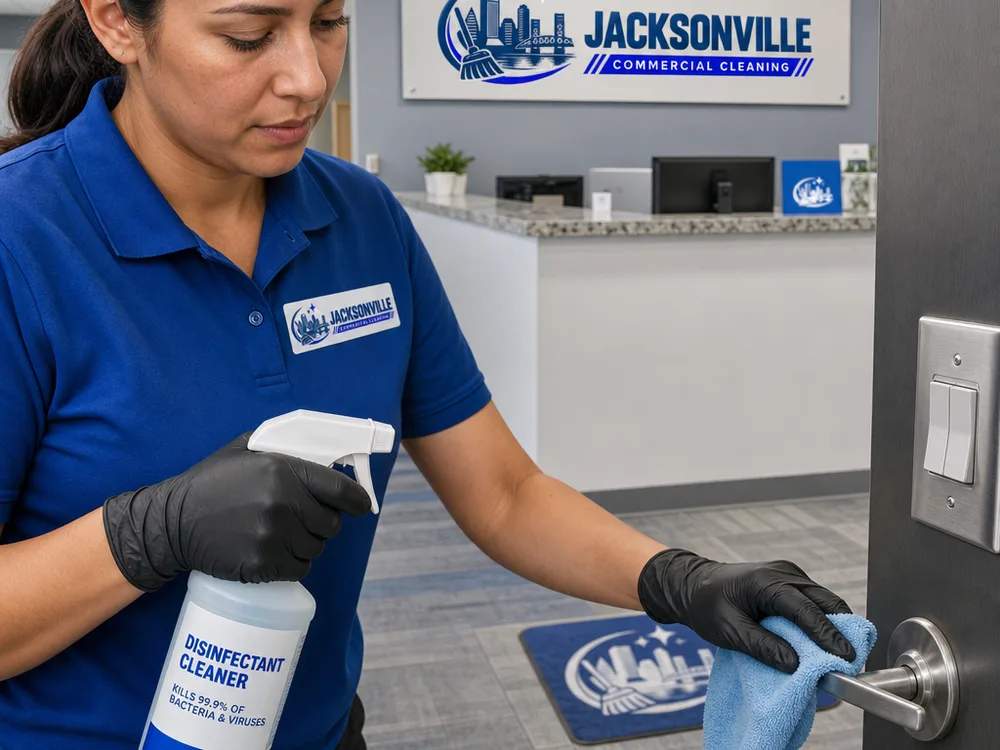
Cleaner disinfecting office door handles, switches, and reception surfaces with labeled products
Cleaned before doors open

Restaurant Cleaning in Jacksonville FL

A restaurant is judged twice: by guests who see the dining room and by an inspector who looks behind the line. We clean for both, on the hours between your last cover and your first prep.

✓Overnight service windows
✓Grease film attention
✓Inspection-minded detail
✓Dining room polish
Two audiences, one building

Restaurant cleaning that survives inspection

Grease does not stay where it is made. It travels on air from the cook line into dining rooms, settles on light fixtures and wall surfaces, and builds an invisible film that holds dust and odor. Guests read that film as a tired room long before they could name what they are seeing.

Behind the line, the same soil becomes a compliance question. Floor drains, the gaps between equipment, the backs of shelving and the base of every leg are where an inspector's flashlight goes, and they are also the hardest places for a closing crew to reach at the end of a long service. Cleaning those zones on a planned cycle is what keeps a surprise visit from becoming a bad morning.

Jacksonville adds humidity that keeps surfaces tacky and encourages odor in anything left damp. Mats, mop sinks and grout lines need drying as much as they need washing, and a mop head that never fully dries between services will spread more than it lifts by the end of the week.

Request a Callback
Both sides of the pass

What restaurant cleaning covers

What this covers in practice, from dining rooms and bar areas, kitchen floors and drains through the rest of the list below, each with the detail that matters on site.

Request a Callback

Dining rooms and bar areas

Tables, booth seating, chair legs, rails, light fixtures and the wall surfaces beside every table carry handprints and airborne grease. Vacuuming and hard-floor work run after close, and the aim is a room that looks ready rather than recently mopped.
Kitchen floors and drains

Cook-line flooring holds grease in its texture and in the grout, which is where slip risk and odor begin. Degreasing and scrubbing work the surface, the coving and the drain surrounds, with mats taken out, washed and dried rather than wiped in place.

Behind and under equipment

Soil collects where nobody can reach during service: the gaps flanking the range, the backs of shelving, equipment legs and the wall behind the fryer. These areas run on a periodic cycle because they need time and the kitchen cold.

Restrooms guests judge you by

Restroom condition travels straight to review sites, so fixtures, partitions, mirrors, dispensers and floors get detail attention rather than a wipe. Grout and the floor edge around the base of fittings matter most, since that is where odor settles in.

Server stations and touchpoints

Service stations, POS surfaces, menu holders, door handles, drink stations and the ice well surround take constant hand contact through a shift. Disinfecting those with the right products matters more here than almost anywhere in the building.

Storage and walk-in surrounds

Dry storage shelving, the outside of cold storage units, gasket channels and the floor beneath racking collect spills and crumbs that invite pests. Cleaning them on a schedule keeps a storage area from quietly becoming the reason for a citation.

Built around service hours

Setting a restaurant cleaning scope

Most restaurant plans split into nightly tasks and periodic ones. Nightly work covers dining rooms, restrooms, touchpoints, trash and hard floors. Periodic work takes the places a closing crew realistically cannot reach: behind equipment, high surfaces carrying grease film, grout restoration, wall washing in the kitchen and the detail cleaning of storage shelving.

Where the line sits depends on your own closing routine. Kitchens that already handle nightly equipment cleaning want us focused on floors, dining rooms and periodic detail, while operations running a lean closing team often hand over more.

Hood systems, fire suppression and the specialist contractors who maintain them keep their own visits, and our schedule is built around those dates so no surface is covered twice and nothing falls between the two providers.

Request a Callback
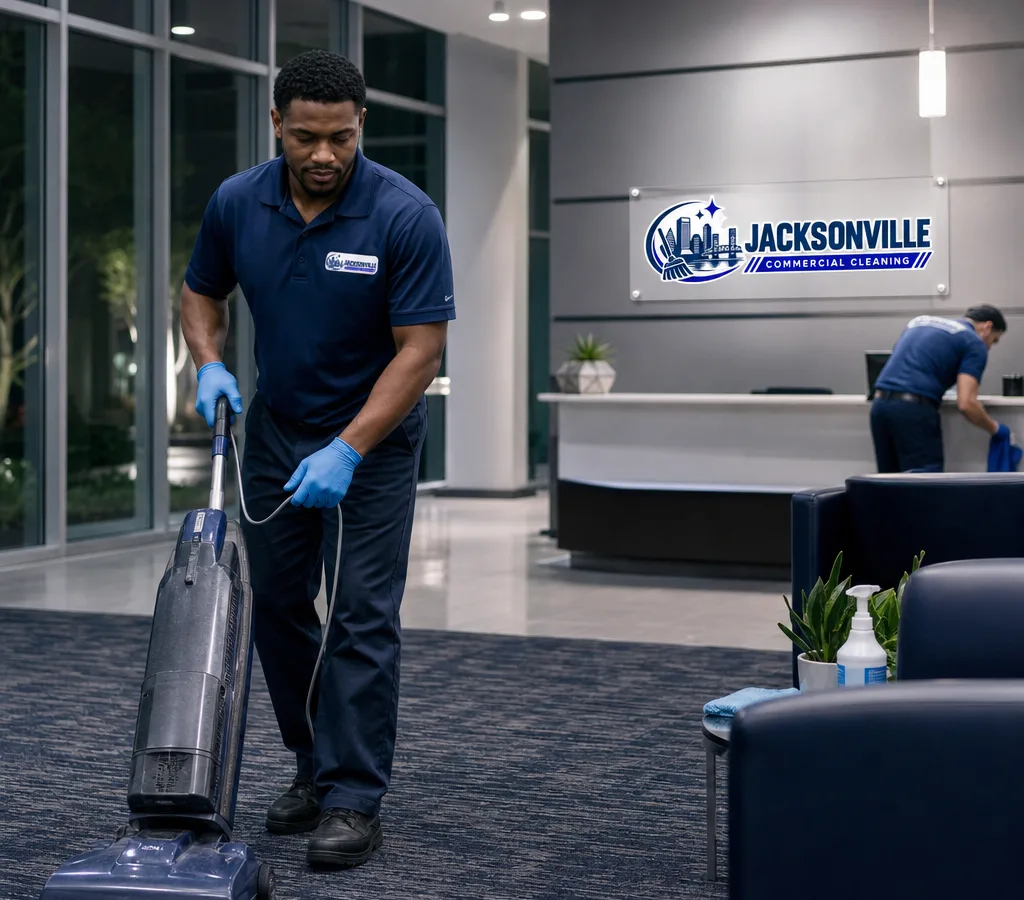
Professional commercial cleaner working in a modern Jacksonville office lobby after hours
Fitting the closing routine

How restaurant service gets started

What this covers in practice, from walk the building after close, divide the closing duties through the rest of the list below, each with the detail that matters on site.

Request a Callback
01

Walk the building after close

Seeing the space at the end of service shows what the day actually leaves behind: where grease has carried, which floors hold water, how the mats look. A daytime visit to an empty dining room hides most of it.

02

Divide the closing duties

Your team's closing list and our scope get laid side by side so each task has exactly one owner. Equipment cleaning, food handling and anything inside cooking appliances stay with your staff unless you ask otherwise.

03

Agree the access window

Keys, alarm codes, which door the crew uses and how late deliveries or private events shift the schedule get settled in writing. Service happens between close and prep, and the window is confirmed rather than assumed.

04

Reset to a clean baseline

A heavier opening pass on floors, grout, restrooms and grease-carrying surfaces brings the building to the standard the nightly routine is meant to hold. Without it, the recurring plan spends months chasing a backlog.

05

Verify, then adjust by season

Supervisor checks run against the written list, and the plan shifts as your covers do. A patio that gets busy in spring and a slower summer stretch both change what deserves the hours.

Kitchens across the city

Restaurant cleaning around Jacksonville

Dining rooms in San Marco and Riverside tend to be older buildings with hard floors, tile and character that rewards careful detail work. Downtown restaurants work around event nights and limited parking for a crew. Newer builds and chain operations with their own corporate checklists fill Southside and Baymeadows, Mandarin and Orange Park hold neighborhood places and strip-center kitchens, and Jacksonville Beach adds sand at every entrance.

Volume changes the plan as much as the address does. A high-turn kitchen serving late into the evening needs a tighter window and far more frequent grout attention than a lunch operation that closes in the afternoon and sits empty.

Operations that want their storefront and entry glass kept sharp between visits can add window cleaning onto the same schedule rather than arranging and tracking it separately.

What a quote weighs

What restaurant cleaning costs in Jacksonville

Quotes for a restaurant weigh the dining area against the kitchen, because each takes very different labor. Floor type and grout condition, the size of the cook line, restroom count, how much the closing team already covers, and the length of your access window all shape the hours.

Beyond those, the number moves with how often each task comes around, whether periodic deep work is bundled or booked separately, the soil level a walkthrough finds, and whether patio or private dining space is included. It follows that visit and the written task list.

Request a Callback
Inspection and upkeep

Restaurant cleaning questions

Answers to what buildings ask before they arrange a walkthrough, covering scope, scheduling and how the work gets checked.

Will cleaning help us pass a health inspection?

Cleaning closes many of the findings inspectors write up: soiled floors and drains, grease on surfaces, dirty restrooms, debris under equipment. It cannot fix food handling, temperature control or equipment repair. A planned cycle removes a whole category of easy findings and leaves operational practice to your team.

Do you clean the kitchen equipment itself?

Floors, surrounds, exteriors and the areas around equipment belong in a cleaning scope. Anything inside cooking appliances, food-contact surfaces and the hood and duct system are specialist or staff tasks, confirmed during the walk so the division is written down. That keeps responsibility clear when an inspector asks who cleans what.

When can you work in a busy restaurant?

After close and before prep is the normal window, which often means an overnight crew. Breakfast operations sometimes prefer an afternoon lull instead. Either way the window is agreed in writing, along with how a late private event or a delivery shifts that night's visit.

Why do the kitchen floors still feel greasy?

Usually because grease has worked into grout and floor texture, where mopping spreads it rather than lifting it. Degreasing with correct dwell time, then machine scrubbing and rinsing, pulls it out. Floors in that condition typically need a restoration pass before a nightly routine can hold them.

Can you deal with odors in the dining room?

Odor almost always has a source: a saturated mat, grease film on fixtures and walls, grout in restrooms, or a drain that needs attention. Masking it rarely lasts. Our walkthrough traces where the odor actually lives, and the scope targets that source rather than relying on fragrance.

How often should a restaurant be deep cleaned?

Nightly work keeps a building presentable, while the periodic pass behind equipment and into grout is what keeps it from slipping. Kitchens running heavy volume want that pass considerably more often than a light lunch operation. Frequency gets set from your volume and the condition the first walkthrough finds.

Talk through your closing routine

Tell us your service hours, what your closing team already handles and where the building gives you trouble. We will walk it after close and put a nightly and periodic plan in writing.

Request a quote

Tell us about your facility

Send the building type, the areas that matter most and your preferred service window, and we will follow up to arrange a walkthrough.