
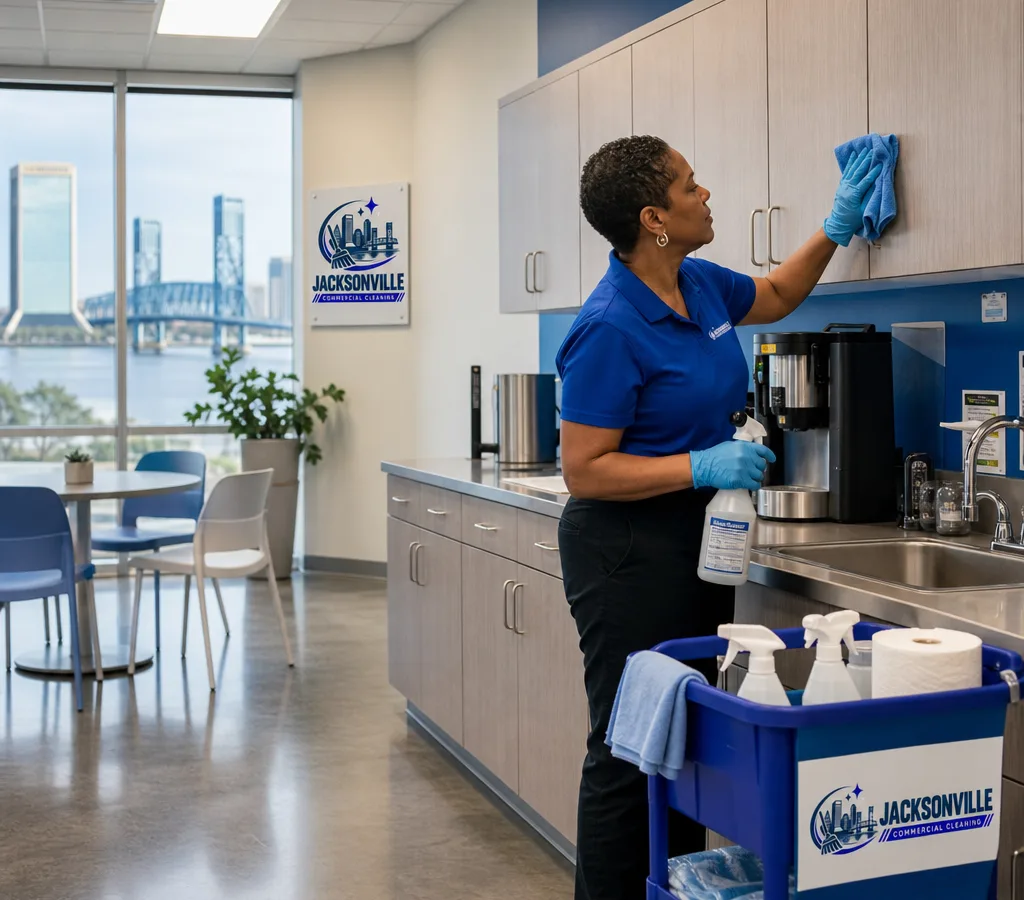
Commercial cleaner performing a detailed deep clean in a Jacksonville office breakroom
Sand gets in everything

Commercial Cleaning in Jacksonville Beach FL

Every business near the ocean fights the same two things: sand that arrives on every pair of feet and salt air that works on glass and metal. We build the plan around both.

✓Entry sand control
✓Salt film on glass
✓Seasonal frequency shifts
✓Early morning service
Two problems, every building

What ocean air does to a building

Sand is abrasive, and that is what makes it more than a tidiness issue. Tracked across a hard floor it works like a mild grinding compound, dulling finish in the traffic lanes far faster than the same floor would wear inland, and it collects in door tracks, along baseboards and in carpet backing where a vacuum pass never reaches.

Salt air does quieter damage. It leaves a film on glass that ordinary cleaning smears rather than lifts, it corrodes door hardware, window frames and anything metal near an entrance, and it comes back within days of a visit whatever the weather does. Buildings a few blocks from the water notice it; buildings on the front line plan around it. Treating both as permanent conditions rather than occasional nuisances is what separates a workable plan here from one copied off an inland building.

Visitor numbers then swing hard between seasons, which changes how often all of it needs doing. A frequency that holds a building through February will not hold the same building through a busy July, so the plan carries two cycles rather than one average.

Request a Callback
Beach business types

What we clean at the beach

What this covers in practice, from restaurants, bars and patios, retail storefronts and displays through the rest of the list below, each with the detail that matters on site.

Request a Callback

Restaurants, bars and patios

Interior dining space, bars, restrooms and hard floors are serviced overnight, with outdoor seating and patio surfaces included since those take sand, salt and weather continuously. Periodic kitchen floor and grout work runs on its own cycle.
Retail storefronts and displays

Entry glass, display windows, sales floors and restrooms need frequent attention where sand arrives all day. Both glass faces, the frames and the door tracks are handled together, because tracks full of grit put the dirt straight back on the pane.

Offices and professional suites

Office suites along the coast get recurring work on restrooms, break areas, glass and flooring, with entrance matting treated as a priority rather than an afterthought. Catching sand at the door protects every floor behind it.

Hospitality and event space

Lobbies, meeting rooms, event space, restrooms and corridors in hospitality buildings need presentation held through a busy season and maintained through a quiet one. Scheduling works around bookings and check-in patterns.

Studios and fitness space

Studio floors, equipment contact points, locker rooms and showers carry both perspiration and tracked-in sand, which is an unusually abrasive combination. Floor method and drying time both matter more here than they do inland.

Medical and professional practices

Clinics and practices near the beach follow a written room-by-room routine, with extra attention at entrances where sand arrives and at the restroom grout that humidity works on. Clinical boundaries are recorded in the scope.

Entrances come first

Scoping a building near the ocean

A scope here starts at the door. Matting condition, the length of the entrance run, door track design and how many entrances a building has decide how much sand reaches everything behind them, and fixing that transition is cheaper than cleaning its consequences every visit.

Glass and metal frequency comes next, set by how exposed a particular building is. Front-line properties want noticeably shorter cycles on glass, frames and hardware than those sitting a few streets back behind other buildings.

Seasonal frequency is written in from the start, with a higher cycle through the busy months and a lighter one once the crowds thin, plus the dates each takes effect. That way you are not paying peak hours all year, nor running short when it counts.

Request a Callback
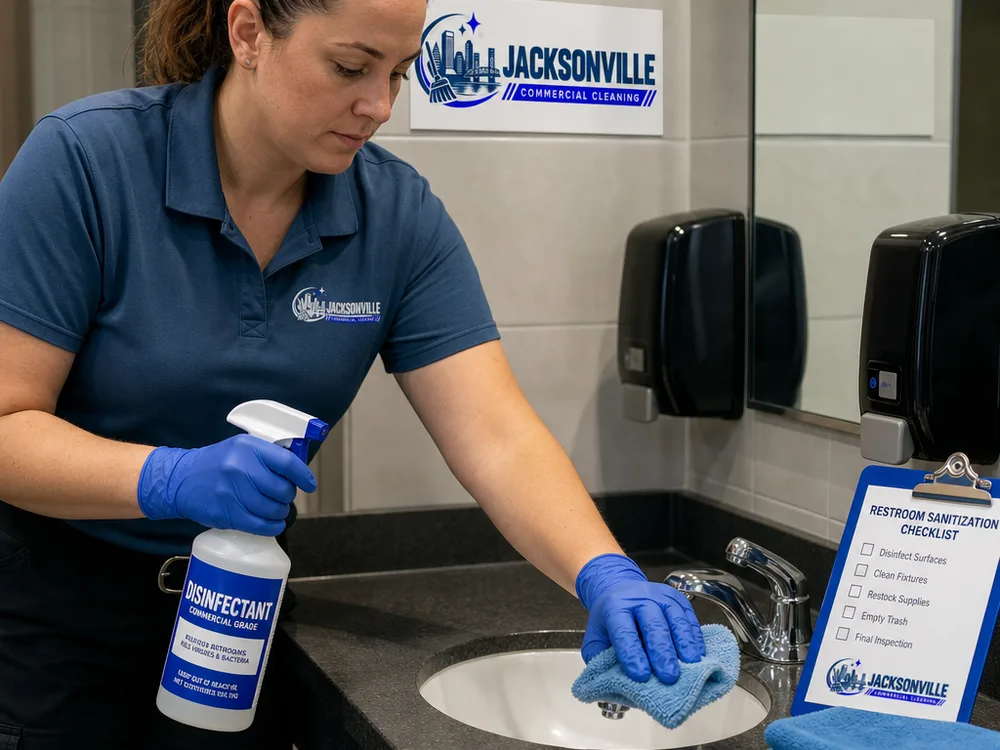
Cleaner sanitizing a commercial restroom with labeled disinfectant, color-coded microfiber cloths, and a checklist
Learning your exposure

How beach service gets set up

What this covers in practice, from assess the exposure, fix the entrance transition through the rest of the list below, each with the detail that matters on site.

Request a Callback
01

Assess the exposure

A visit records how close the building sits to the water, which way the prevailing wind hits it, where the entrances face and how much glass is exposed. Those factors set the glass and hardware cycle more than building size does.

02

Fix the entrance transition

Matting, track condition and the entry run are addressed before anything else, since every floor inside depends on how much sand gets past the door. Recommendations here often save more than extra cleaning frequency would.

03

Set seasonal cycles

Two frequencies get agreed, one for the busy season and one for the quiet stretch, with the dates they switch. Writing both in advance avoids a renegotiation every time the crowds arrive or leave.

04

Treat existing salt film

Glass carrying built-up salt and mineral spotting needs restorative treatment before routine cleaning can keep it clear. The first pass establishes what will come off and what has etched into the pane.

05

Review after a full season

Once a busy season has run, the plan gets checked against what actually happened: whether the cycles held, where sand still got through and which surfaces needed more than expected.

Along this coast

Jacksonville Beach and nearby areas

Coverage takes in the oceanfront commercial strip, the retail and restaurant blocks set back from it, professional and medical suites through the city, and the mixed commercial space toward the Intracoastal Waterway. Neptune Beach and Atlantic Beach sit immediately north and are served on the same runs, with Ponte Vedra Beach reached to the south.

Exposure changes noticeably over a short distance. A building facing the ocean needs a shorter glass and hardware cycle than one a few blocks inland, and the scope reflects that rather than averaging across the city.

Businesses with a beach site and another in Jacksonville proper can run both under a single scope and one contact, since the same base serves the city and the coast.

Exposure and frequency

Commercial cleaning costs at the beach

Pricing here follows floor area, surface types, restroom count and glass quantity, as anywhere, with exposure added as a genuine factor. A front-line building needs more frequent glass, frame and entrance work than an equivalent inland property, and the quote reflects that rather than hiding it.

Beyond those, the cycles you choose for each season matter, along with whether outdoor seating or patio space is included, how much salt treatment the glass needs at the outset, and the periodic floor work attached. A visit settles the figure.

Request a Callback
Sand, salt and seasons

Beach business cleaning questions

Answers to what buildings ask before they arrange a walkthrough, covering scope, scheduling and how the work gets checked.

Can you really keep sand out of our building?

Not entirely, and anyone promising that is overselling. What works is catching it at the entrance with proper matting and an adequate entry run, then targeting where it collects: door tracks, baseboards, floor edges and carpet backing. Buildings that fix the transition see less of it everywhere behind the door.

Why does our glass look dirty days after cleaning?

That will be salt film. It settles continuously on exposed glass and ordinary cleaning tends to smear it rather than remove it, so each pass leaves a little more. Where mineral deposits have built up, restorative treatment is needed first, after which a shorter routine cycle keeps the glass clear.

Does the ocean air damage anything else?

Door hardware, window frames, hinges, rails and fixings all corrode faster near the water, and cleaning slows that rather than stopping it. Crews note deterioration they find so you can address it as maintenance, since a corroded frame eventually marks the glass regardless of how often it is cleaned.

How do you handle the busy season?

With two agreed frequencies and a switch date. Footfall climbs sharply when visitors arrive, which means entrances, restrooms and floors need a shorter cycle for a defined stretch rather than a permanent contract change. Both cycles are priced up front so neither is a surprise.

Can you work before our restaurant opens?

Early morning and overnight are both normal here, and for beachfront restaurants the early window often suits better because it clears overnight sand and salt before service. The window is written down, including how a late event shifts it.

Do you cover Neptune Beach and Atlantic Beach?

Both are on the same runs, along with Ponte Vedra Beach to the south, so a business with more than one location along the coast can keep a single scope and contact. Exposure is assessed per building, since even neighboring properties differ.

Walk your beach property

Show us the entrances, the glass and where sand ends up. We will set the exposure cycles, recommend what to change at the door, and price the busy and quiet seasons separately.

Request a quote

Tell us about your facility

Send the building type, the areas that matter most and your preferred service window, and we will follow up to arrange a walkthrough.