
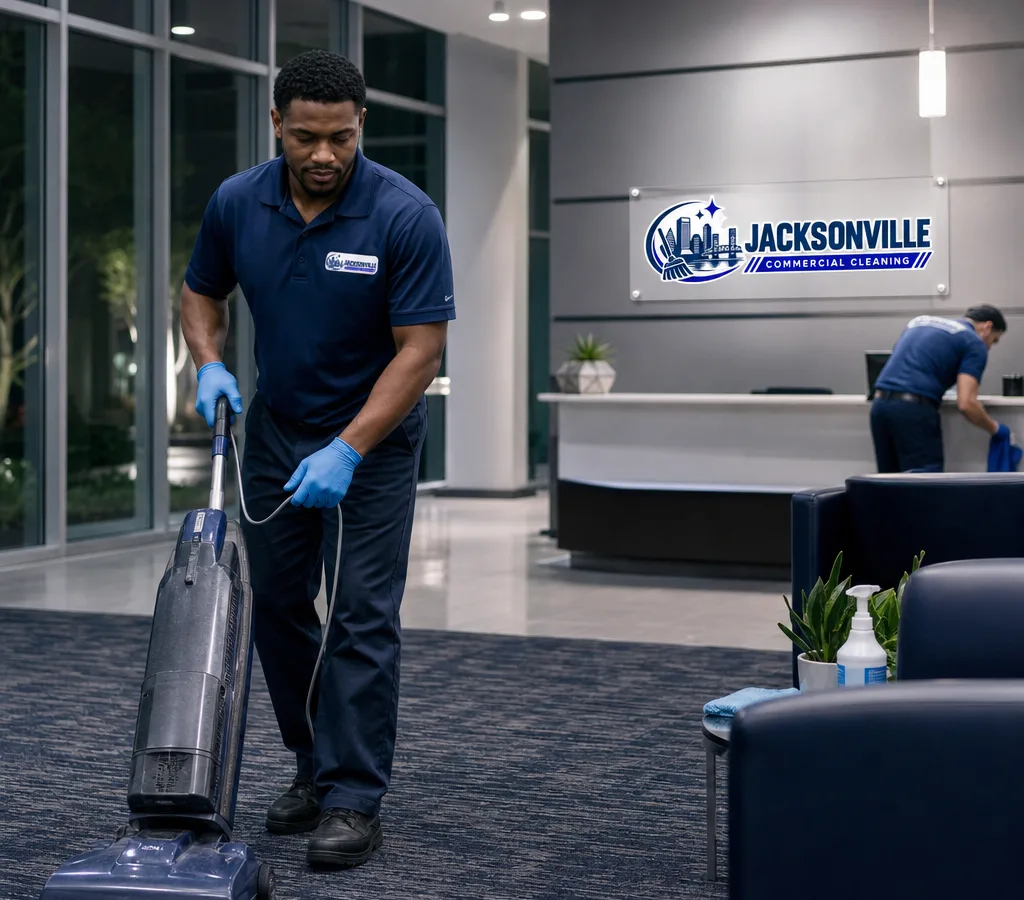
Professional commercial cleaner working in a modern Jacksonville office lobby after hours
Presentation under footfall

Retail and Shopping Center Cleaning Jacksonville

Retail presentation decays by the hour, not by the week. We keep entries, sales floors, common areas and restrooms looking open and cared for while customers keep walking through them.

✓Before-open service
✓Entry glass attention
✓Common area upkeep
✓Day porter coverage
Footfall sets the pace

Retail cleaning that keeps pace with traffic

Shoppers notice entrances, floors and restrooms, usually without consciously registering why a store feels well run. Smudged entry glass and a scuffed traffic lane read as neglect even when the merchandising is immaculate, and that impression forms within a few steps of the door.

Volume is what makes retail different from an office. Hundreds of people cross the same square yards of flooring, touch the same handles and use the same restrooms between opening and closing, so soil arrives faster than any single nightly visit can hold back. A workable plan combines overnight work with daytime attention at the points that degrade quickest.

Weather drives a surprising amount of it here. Afternoon storms put water and parking-lot grit straight onto entrance flooring, which then travels into the sales floor on every pair of shoes that follows it through the door.

Request a Callback
From curb to stockroom

What retail cleaning covers

What this covers in practice, from entry glass and doorways, sales floor hard surfaces through the rest of the list below, each with the detail that matters on site.

Request a Callback

Entry glass and doorways

Doors, sidelights and display glass collect handprints within hours of opening. Both faces, the frames, the thresholds and the track grit get attention, because an entrance is the single surface every customer looks through before deciding anything about the store.
Sales floor hard surfaces

Traffic lanes dull faster than the rest of a floor, so maintenance targets them rather than treating the whole area alike. Controlled dusting, edge detail and the appropriate burnishing or scrubbing method keep the surface even under bright retail lighting.

Restrooms shoppers remember

Customer restrooms influence whether people linger or leave, and in a center they shape opinion of every tenant. Fixtures, partitions, mirrors, dispensers, floors and the grout around fittings get worked properly, with restocking built into the visit.

Common areas and corridors

Mall corridors, seating, directories, elevators, escalator surrounds, rails and shared entrances carry everyone's traffic and belong to nobody in particular. Keeping them consistent is usually the center manager's clearest signal that the property is well run.

Fitting rooms and counters

Fitting rooms, mirrors, benches, hooks, checkout counters and pin pads take constant contact and are easy to skip when a store is busy. Disinfecting those touchpoints and clearing the floor corners keeps them from becoming the detail a customer complains about.

Stockrooms and back corridors

Receiving areas, stockroom floors, break space and the corridor behind the sales floor collect packaging debris and dust. Keeping them clear protects staff walkways, speeds up restocking and stops back-of-store grit from migrating forward.

Trading hours decide

How retail scope and timing work

Retail scopes usually run on two tracks. Overnight or before-open work handles floors, restrooms, glass and the full task list without customers in the way. Daytime coverage, often a day porter, keeps entrances, restrooms and spill response under control through the busiest hours, which is where a single nightly visit tends to fall short.

How those two tracks divide depends on footfall and on what your own staff already handle between customers. Smaller stores often need only an early visit, while a center with shared restrooms almost always needs someone present through the trading day.

In a multi-tenant property the scope has to name the boundary between common area work and each tenant's own space, so that a center manager and a store manager are never both assuming the other one owns a particular task.

Request a Callback
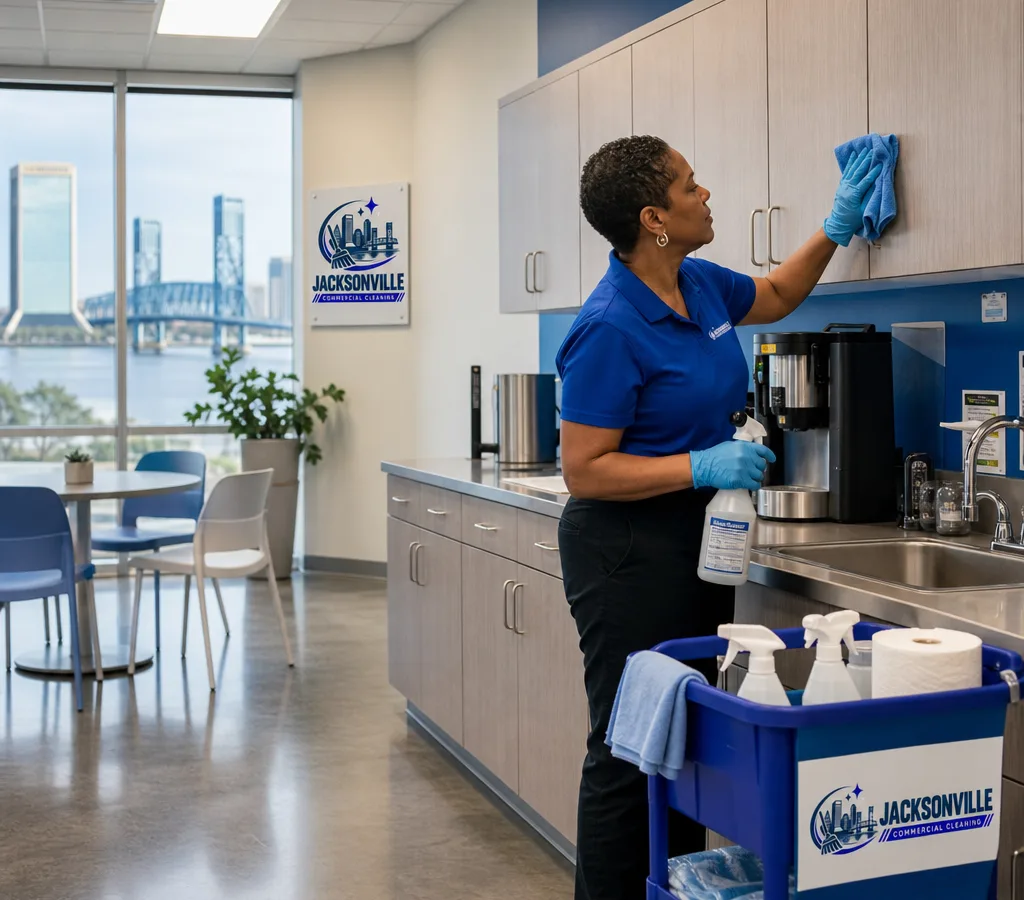
Commercial cleaner performing a detailed deep clean in a Jacksonville office breakroom
Starting without disruption

Beginning retail service at your property

What this covers in practice, from visit during trading hours, separate common and tenant areas through the rest of the list below, each with the detail that matters on site.

Request a Callback
01

Visit during trading hours

The walkthrough happens while the property is busy, because that is the only way to see where traffic actually concentrates, which doors everyone uses and how quickly the entrance flooring loses its appearance.

02

Separate common and tenant areas

In a center, every task is assigned to either the common area scope or a tenant's own, in writing. That boundary prevents the familiar argument about shared restrooms and corridor glass once the property gets busy.

03

Fix the service windows

Overnight, before-open and daytime coverage are each scheduled around your hours, security arrangements and delivery times. Alarm procedures, which entrance the crew uses and holiday trading changes are recorded rather than improvised.

04

Bring the floors back first

An opening pass on floors, entry glass and restrooms establishes the standard the routine is meant to maintain, so the recurring plan is holding a line rather than slowly recovering ground.

05

Review against peak seasons

Retail volume swings hard across the year, so the plan is reviewed before the busiest stretches. Added hours during a seasonal peak cost far less than the lost impression of a property that cannot keep up.

Retail corridors we cover

Retail cleaning around Jacksonville

The heaviest concentration of centers and big-box retail sits across Southside and Baymeadows, with parking-lot grit tracked in all day. Downtown storefronts work around events and street traffic, San Marco and Riverside bring boutique retail in older buildings where original flooring needs a gentler method, Mandarin and Orange Park bring neighborhood strip centers, Arlington adds suburban retail, and Jacksonville Beach puts sand through every doorway.

Property type matters as much as the address does. A single storefront can work with an early visit, while an enclosed center carrying shared restrooms and long corridors genuinely needs a presence through the trading day.

Centers wanting their floors genuinely restored rather than simply maintained can schedule our floor care services around trading hours and reopening times.

Where the hours go

What retail cleaning costs in Jacksonville

A retail quote is driven by sales area, entrance and glass quantity, restroom count, the floor surfaces involved and the footfall a property carries. Common areas in a center are priced apart from tenant space, since each carries a very different workload.

From there it moves with whether daytime porter coverage is included, how early a crew needs access, the seasonal peaks you want covered, and the periodic floor and glass work attached to the plan. A walkthrough during trading hours sets it.

Request a Callback
Shared space questions

Retail and center cleaning questions

Answers to what buildings ask before they arrange a walkthrough, covering scope, scheduling and how the work gets checked.

Do you clean while the store is open?

Both arrangements are common. Overnight or before-open work handles the full task list without customers present, and daytime porter coverage keeps entrances, restrooms and spills under control through peak hours. Larger properties generally need both, because footfall undoes an overnight visit well before closing.

Who is responsible for common areas in a center?

That gets written down before service starts. Common corridors, shared restrooms, seating and entrances normally sit with the property, while each tenant covers their own space. Having the split in writing is what stops a shared restroom from being everyone's responsibility and therefore nobody's.

How often does entry glass need attention?

More often than any other surface in retail, because every customer touches it. Many stores want daily attention on doors and lower panels with a fuller glass visit on a longer cycle. Properties near the beach or a busy road usually need the shorter interval.

Can you handle spills during trading hours?

Daytime porter coverage exists largely for that. A crew member on site can deal with a spill, a restroom problem or tracked-in water quickly, which matters for both customer impression and slip risk. Stores without daytime coverage rely on their own staff between visits.

What happens during the holiday season?

Footfall climbs and so does the rate at which a property gets dirty, so the plan is reviewed before peak trading. That usually means added frequency on entrances, restrooms and floors for a defined stretch rather than permanently changing the contract.

Will you work around our merchandising?

Yes, and the walkthrough covers it. Display positions, fixture layouts and stock on the floor all affect how a crew moves through a space. Nothing gets moved without agreement, and the routine is written so merchandising is never disturbed to make cleaning easier.

Walk your property with us

Tell us the property type, your trading hours and where presentation slips fastest. We will visit while you are busy, map the boundaries clearly and build a plan around your footfall.

Request a quote

Tell us about your facility

Send the building type, the areas that matter most and your preferred service window, and we will follow up to arrange a walkthrough.