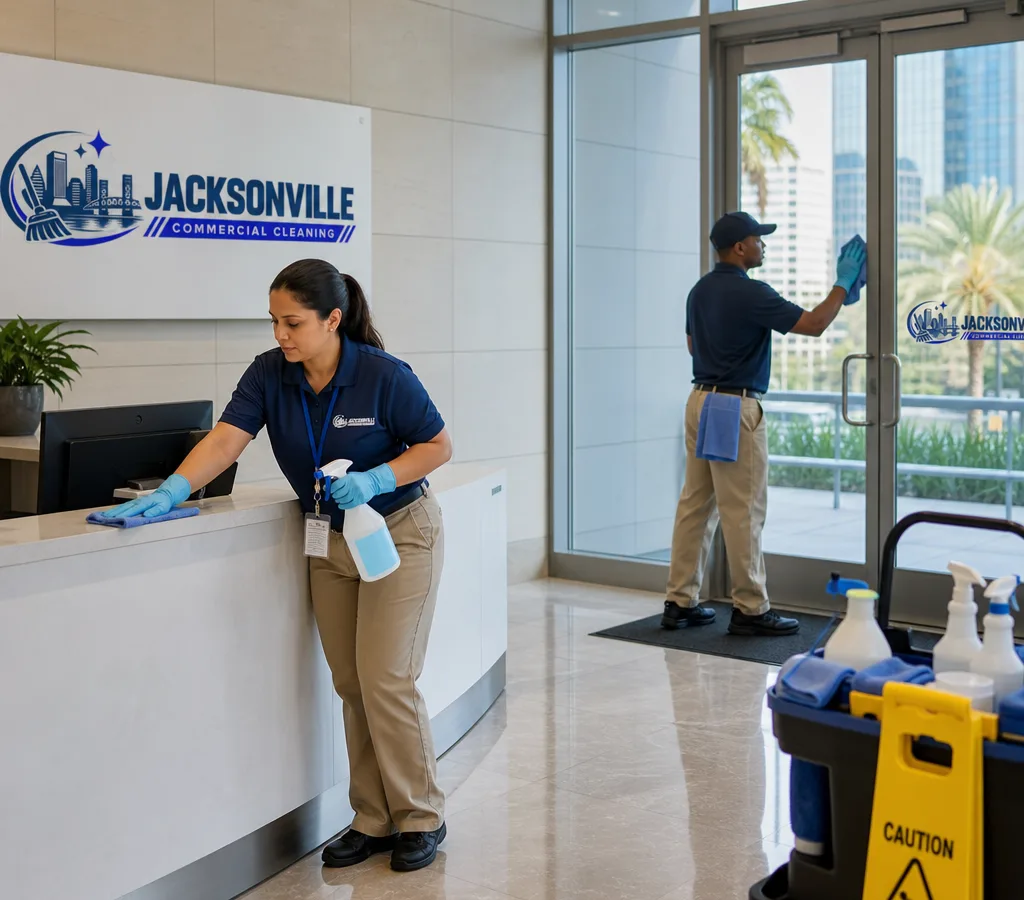
Early-morning commercial cleaning crew disinfecting lobby touchpoints in a Jacksonville office building
Cleaning around live operations

Industrial Cleaning Services in Jacksonville FL

Warehouses, distribution centers and light manufacturing plants collect a different kind of soil. We clean around racking, forklift lanes and production equipment on the shift windows you keep open.

✓Off-shift crew scheduling
✓High-reach dust control
✓Slab scrubbing programs
✓Plant safety alignment
Facilities that never fully stop

Cleaning built for working industrial space

An industrial building earns its soil. Pallet wrap, cardboard fiber, rubber off forklift tires, oil film near equipment and airborne dust from product handling all settle where an office routine never visits: steel racking uprights, mezzanine edges, conduit runs and the slab under staged inventory.

Jacksonville Commercial Cleaning works from 6593 Powers Ave, Suite 4, and builds industrial scopes around your production calendar rather than around a standard route. Crews learn the traffic plan before touching anything, stage equipment where it will not block a dock door or an aisle, and clean in the order that keeps your people moving and your shipping on time.

Florida heat and humidity add their own pressure, pulling moisture into dust on overhead steel and turning spill residue sticky instead of letting it dry. Both of those change how a slab gets scrubbed and how often the overheads need attention, which is why a plan copied from a plant in a drier state rarely holds up through a summer here.

Request a Callback
Where the work concentrates

What industrial cleaning covers in your plant

What this covers in practice, from concrete slab scrubbing, high dusting and racking through the rest of the list below, each with the detail that matters on site.

Request a Callback

Concrete slab scrubbing

Ride-on and walk-behind scrubbing pulls embedded tire marks, dust film and spill residue out of sealed and bare concrete. Lane-by-lane passes keep aisles open, and the heavy soil near dock doors gets a second pass before the floor dries.

High dusting and racking

Dust sits on racking beams, joists, conduit, light fixtures and sprinkler pipe until airflow drops it onto product. Reach poles and lift-assisted work bring it down in a controlled order, top levels before floors, so debris is captured instead of recirculated.

Dock and staging areas

Dock plates, trailer aprons, pallet staging and compactor surrounds take the roughest soil in the building. Degreasing, pressure-assisted rinsing where drainage allows, and edge detail along bollards and door tracks keep those zones from spreading soil inward.

Plant restrooms and break areas

Restrooms and lunchrooms in a plant carry heavier use than office equivalents, often across overlapping shifts. Fixture descaling, floor drain attention, partition wiping and consumable restocking get scheduled so a shift change never arrives to a closed restroom.

Production equipment surrounds

Cleaning near machinery stays outside the equipment itself unless your maintenance team directs otherwise. Crews clear floor debris, dust and residue around bases, guards and control panels, then flag any leak or buildup that looks like a maintenance item rather than a cleaning one.

Office and shipping front end

Most plants run a small office core, a shipping desk and a driver check-in area that visitors actually see. Those rooms get detail treatment: glass, desks, floors and entry mats, so the administrative side matches the condition of the floor.

Scope set on site

How an industrial scope gets defined

Coverage usually splits into recurring work and periodic work. Recurring tasks hold the line: restrooms, break areas, office zones, trash removal, and aisle sweeping or scrubbing on a rotation. Periodic tasks run on longer cycles because they need equipment, access or downtime, including high dusting, slab scrubbing wall to wall, dock degreasing and racking detail.

Deciding that split takes a walk of the building with someone who knows its rhythm. Dust sources, drain locations, water and power access, forklift routes, restricted rooms and the hours a crew can reach the floor all change what belongs in each cycle.

The written scope records the result, including frequency per task and anything that needs your approval before it is added. Having it on paper is what keeps a plant scope from drifting as shifts and inventory levels change through the year.

Request a Callback
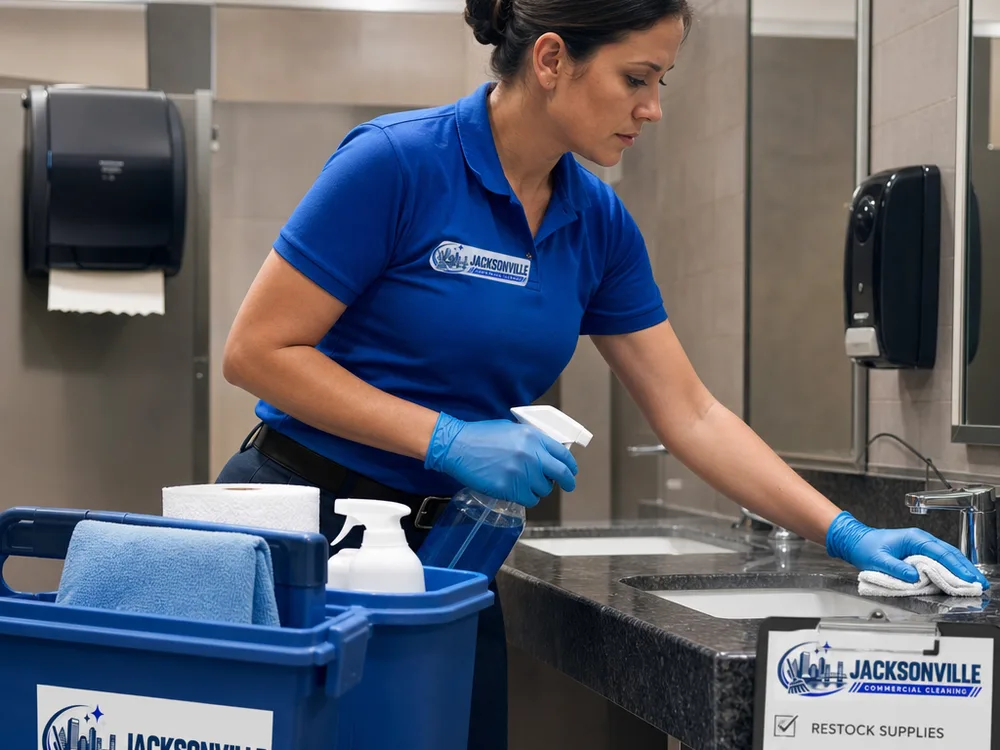
Cleaner restocking supplies and disinfecting fixtures in a commercial restroom with a checklist visible
From walk to steady rotation

Starting industrial service at your site

What this covers in practice, from facility walk with operations, safety and access alignment through the rest of the list below, each with the detail that matters on site.

Request a Callback
01

Facility walk with operations

Someone who runs the floor shows us the traffic plan, the restricted zones, the drains and the spots that generate complaints. That conversation sets priorities faster than a clipboard survey of square footage ever does.

02

Safety and access alignment

Badge procedures, lockout expectations, protective equipment rules for your floor, where machines can be parked and which doors a crew may use get written down before service begins. Plant rules outrank our preferred sequence, every time.

03

Shift window agreement

Production hours decide everything else. Crews slot into off-shift gaps, weekend downtime or a quiet stretch between runs, and the schedule names which areas may be worked while the building is live.

04

Baseline reset pass

Buildings carrying old dust and slab film start with a heavier pass, so the rotation maintains a standard instead of chasing backlog. Racking and overheads come down first, then the floor takes its deep scrub.

05

Rotation and recorded checks

Afterward the cycle runs and supervisors verify it against the written scope. Findings go back to your contact, along with notes on anything the building needs from maintenance rather than from cleaning.

Industrial corridors we serve

Industrial cleaning across the Jacksonville area

Industrial work takes us mostly to the Northside and the warehouse corridors near Downtown, where distribution space and truck traffic concentrate. Arlington and Southside add light manufacturing and service shops, Baymeadows contributes flex-industrial units that share a slab with office space, and Orange Park sites tend toward smaller plants and contractor yards.

Each of those settings changes the plan. A high-bay distribution building is mostly slab and racking, while a flex unit puts a reception area a few steps from a forklift lane and needs the boundary between the two treated carefully.

Plants that also want nightly coverage between the periodic passes can pair this work with our janitorial services in Jacksonville, keeping restrooms, break areas and offices on a recurring frequency while the slab and overhead cycles run separately.

What moves the number

What industrial cleaning costs in Jacksonville

Industrial pricing follows the building. Slab area and ceiling height, how much of the floor is racked or staged, the dust load your process creates, and dock and compactor condition all change the labor and equipment a scope requires.

The final figure then depends on whether work happens during a live shift or in downtime, how much of the scope needs lift access, the frequency you choose for each task, and what your safety and badge procedures add in time. It is confirmed after a walkthrough, priced against the written scope.

Request a Callback
Plant questions, answered

Industrial cleaning questions from plant managers

Answers to what buildings ask before they arrange a walkthrough, covering scope, scheduling and how the work gets checked.

Can you clean while the plant is running?

Yes, within limits agreed in advance. Aisles, offices, restrooms and break areas can usually be serviced during a live shift as long as forklift routes stay clear. Scrubbing the slab wall to wall, or anything needing a lift, normally waits for downtime, because closing an aisle mid-shift costs you more than the cleaning saves.

Do you handle high areas like racking and joists?

High dusting belongs in most industrial scopes, worked from poles or lift equipment depending on reach and what sits below. Sequence matters: overheads come down before the floor is finished, otherwise settled dust lands on a clean slab. Anything above live equipment gets scheduled with your maintenance team.

What about oil spots and spill residue on concrete?

Degreasing and scrubbing lift most oil film and traffic staining from sealed or bare concrete, though concrete is porous and older spills can leave a shadow. Expect us to say which marks will improve and which are in the slab for good, rather than promising a floor that looks newly poured.

Will your crews follow our safety rules?

Your plant's rules govern the work. Badge-in procedures, required protective equipment, lockout boundaries, restricted rooms, machine parking and traffic routes get recorded in the scope so crews arrive already knowing them. Anything that looks unsafe stops and goes to your contact instead of being worked around.

How do you keep dust out of stored product?

Staging and containment do that job. Cleaning gets sequenced away from open inventory, overhead dust is captured as it comes down where airflow allows, and filtered vacuums replace anything that would blow dust into the air. Where product cannot be protected, the area waits until it can.

Can one scope cover both the plant floor and the offices?

It can, and that is usually simpler than running separate vendors. The office core, restrooms and shipping desk sit on a recurring frequency while the slab, racking and dock zones run on their own cycles. Each area keeps its own task list so nothing falls between the two.
Walk your facility with us

Tell us what the building runs, which shifts stay busy and where soil causes the most trouble. Our team will walk the floor, write the scope against what is actually there, and set a rotation that fits your downtime.

Request a quote

Tell us about your facility

Send the building type, the areas that matter most and your preferred service window, and we will follow up to arrange a walkthrough.