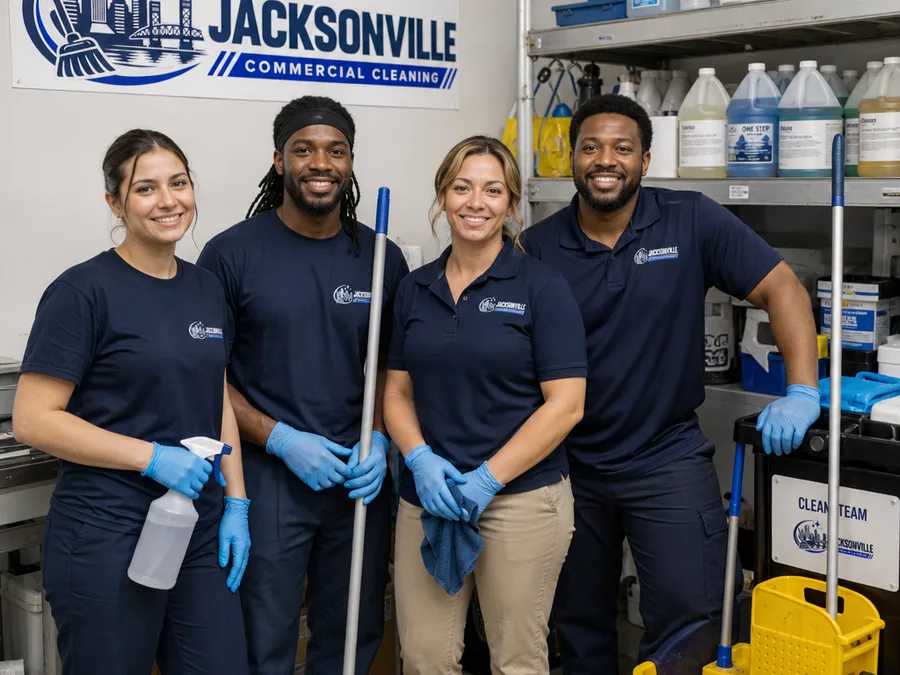
Commercial cleaning team in uniform with labeled supplies and equipment inside a Jacksonville facility
Clean through long hours

Fitness Center and Gym Cleaning Jacksonville FL

Members judge a gym by the locker room and whatever they just touched. We work equipment contact points, locker rooms, studio floors and the sources of odor around hours that barely close.

✓Equipment touchpoints
✓Locker room detail
✓Odor source work
✓Overnight and porter options
Members notice everything

Gym cleaning aimed at what members touch

A member's opinion of a gym is formed by a handful of surfaces: the grips they just held, the bench they are about to lie on, the locker room floor and whether the air smells like anything. Everything else in the building can be immaculate and one of those will still decide whether they renew.

The difficulty is that gyms barely close. Long opening hours and continuous use leave almost no quiet window, so a plan built around one overnight visit will always have the building at its worst during peak evening traffic. Perspiration also makes this soil different: it is deposited on contact surfaces, it soaks into upholstery and matting, and it feeds the bacteria that produce odor, which means frequency on contact points matters more than any amount of floor work.

Humidity here keeps locker rooms, showers and every wet area slow to dry, and that lingering dampness is exactly where odor and surface staining take hold before anyone notices a problem has started. Airflow and drying time matter as much as the cleaning itself.

Request a Callback
Contact points first

What fitness center cleaning covers

What this covers in practice, from cardio and machine touchpoints, free weight areas through the rest of the list below, each with the detail that matters on site.

Request a Callback

Cardio and machine touchpoints

Handles, grips, consoles, screens, seat pads, adjustment levers and rails are what members actually touch and what they watch being cleaned. These surfaces need disinfecting with correct dwell time and a frequency matched to traffic rather than to a nightly schedule.
Free weight areas

Dumbbell handles, barbells, racks, bench upholstery and the floor beneath every station take concentrated perspiration contact. Bench seams and the rubber flooring joints hold residue that produces odor if they are only wiped over on the surface.

Locker rooms and showers

Lockers, benches, shower walls, floors, drains, grout and the fittings between them decide a member's verdict on the whole facility. Humidity makes these spaces slow to dry, so frequency and drying matter as much as the cleaning itself.

Studio and class floors

Studio flooring, mirrors, barres, mats, props and the equipment stored at the edges take heavy use in short bursts. Whichever method the flooring requires is used so traction is never compromised, and shared props get attention between class blocks rather than only at the end of the day.

Odor source treatment

Odor comes from specific places: saturated matting, bench upholstery seams, shower grout, drains and ventilation grilles. The work targets those sources rather than covering the result, because fragrance over a damp source fades within hours.

Reception and common areas

Front desk, entry glass, waiting seating, water stations, hydration areas and the corridors between zones form the first and last impression of every visit. Keeping them sharp is straightforward and disproportionately noticed.

No real closing time

Scoping a facility that rarely closes

Gym scopes usually run on two tracks because a single visit cannot hold a building that is open this long. An overnight or early pass covers the full task list: floors, locker rooms, studios, restrooms and a complete equipment wipe-down. Daytime porter coverage then handles contact surfaces, locker rooms and restrooms through peak hours, which is when condition actually matters to members.

Deciding the balance between those tracks depends on your traffic pattern and what your own staff already do. Many facilities have employees wipe equipment between members, so our work concentrates on thorough coverage and the areas they never get to.

Periodic work then sits on top of both tracks: matting lifted and cleaned underneath, upholstery treatment, grout restoration, high dusting and ventilation grille cleaning, each scheduled for whenever the floor is at its quietest.

Request a Callback
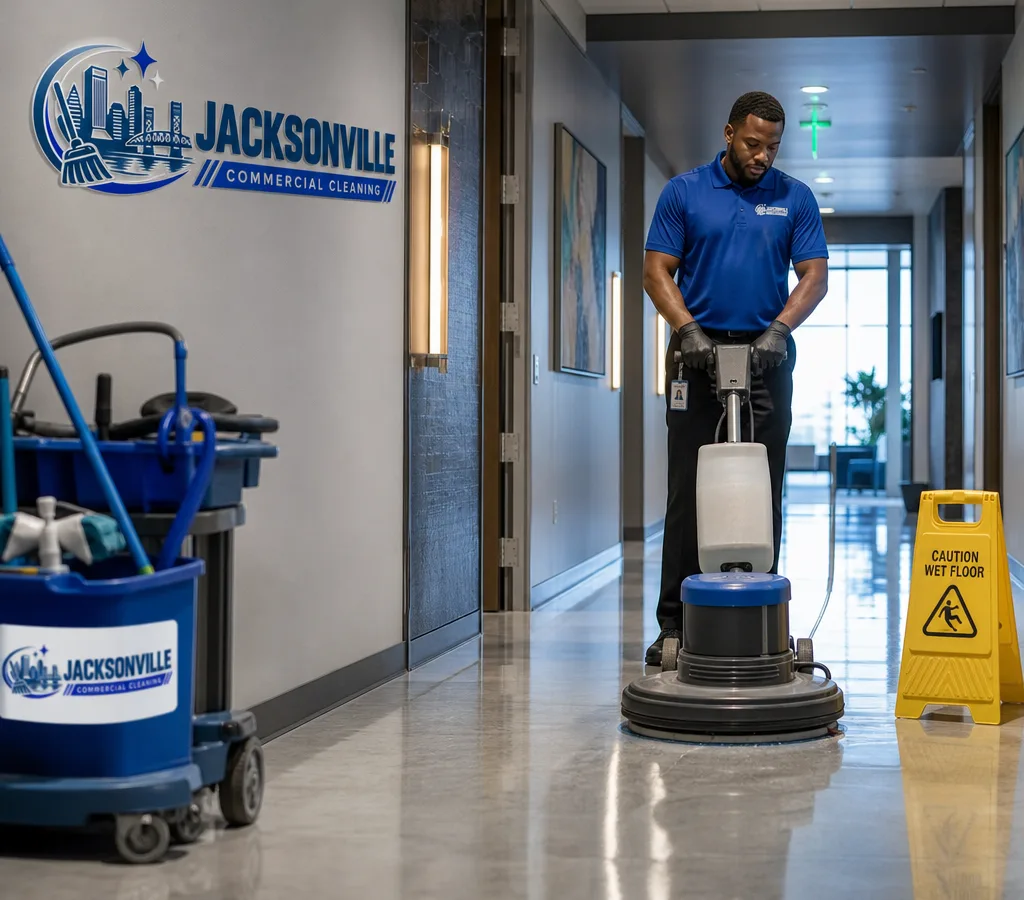
Professional janitorial team member disinfecting a modern Jacksonville office hallway with floor care equipment and safety signage
Working around members

Starting service at your facility

What this covers in practice, from observe peak and quiet hours, locate the odor sources through the rest of the list below, each with the detail that matters on site.

Request a Callback
01

Observe peak and quiet hours

The walkthrough happens across different parts of the day, because a gym at six in the evening and the same room at two in the afternoon are different buildings with different problems.

02

Locate the odor sources

Instead of treating odor as a general condition, the survey finds where it originates: particular matting, bench seams, a shower drain, a grille. Those locations enter the scope as named targets carrying their own frequency.

03

Split overnight and daytime

The task list is divided between a thorough quiet-hours pass and daytime coverage of contact points, locker rooms and restrooms. The division is written so members see attention when the building is busiest.

04

Reset the problem areas

An opening pass handles grout, matting undersides, upholstery and the accumulated residue in weight areas. Equipment and locker rooms in that condition need restoring before a routine can maintain them.

05

Track member feedback

Complaints are useful data. Locker room and odor feedback feed back into frequency decisions, and supervisor checks verify the routine is holding where members actually comment.

Facilities around town

Gym cleaning across Jacksonville

Larger clubs occupy retail and office developments throughout Southside and Baymeadows, with neighborhood facilities across Mandarin, Arlington and Orange Park. Downtown brings corporate and building-based facilities with narrow hours, Riverside and San Marco carry boutique studios in older buildings, the Northside adds standalone clubs, and Jacksonville Beach brings studios where sand and salt air both arrive on every member.

Format changes the priorities completely. A boutique studio running back-to-back classes needs attention between blocks, while a large club with long hours needs near-continuous locker room coverage instead.

Facilities wanting matting, upholstery and grout genuinely restored can schedule that through our deep cleaning service during a quieter stretch of the year.

Hours and contact surfaces

What gym cleaning costs in Jacksonville

A fitness quote follows equipment count and contact surface quantity, locker room and shower area, studio space, total floor area and the flooring types involved. Member traffic drives it as much as size, since contact frequency rather than square footage creates the workload.

The rest comes down to whether daytime porter coverage is included, how long the quiet window runs, what your own staff cover between members, the periodic matting and upholstery work attached, and how severe the odor problem is at the outset. Visiting across different hours sets it.

Request a Callback
Odor and equipment

Gym and fitness cleaning questions

Answers to what buildings ask before they arrange a walkthrough, covering scope, scheduling and how the work gets checked.

How do you keep equipment hygienic through the day?

Frequency on contact surfaces is the whole answer. Grips, handles, consoles, pads and adjustment points need disinfecting with proper dwell time, repeatedly, which is why daytime coverage matters in a busy facility. A single overnight wipe-down leaves the equipment at its worst exactly when the most members are using it.

What actually causes locker room odor?

Moisture held in grout, drains, matting and bench seams, feeding bacteria that produce the smell. Humidity here makes these areas dry slowly, which compounds it. Treating the sources and improving how quickly surfaces dry works; adding fragrance over a damp source does not last past the afternoon.

Can you work while the gym is open?

Usually you have no alternative, since the quiet window is short. Daytime porter coverage is designed for exactly this, working around members on contact surfaces, locker rooms and restrooms. Members generally respond well to visible cleaning, so it reads as attentiveness rather than disruption.

Do you clean underneath the rubber matting?

That belongs in periodic work. Residue and moisture collect beneath matting and in the joints between tiles, which is a common hidden odor source. Lifting sections, cleaning underneath and drying properly takes time, so it is scheduled during your quietest stretch.

What about the studio floors and mats?

Studio flooring gets the method its surface requires so traction is not compromised, and shared mats and props are treated between class blocks rather than only overnight. Studios running continuous classes need that mid-day attention or the equipment carries through from one group to the next.

Will cleaning fix stained upholstery?

Treatment improves most perspiration staining on bench and seat upholstery, though material and age set the limit. Vinyl that has started to break down holds discoloration permanently. After a first treatment we tell you which pieces will keep improving and which are better replaced.

Visit at your busiest hour

Have us walk the floor during peak traffic and again when it is quiet. We will find the odor sources, split the work between quiet hours and daytime, and set frequency where members notice.

Request a quote

Tell us about your facility

Send the building type, the areas that matter most and your preferred service window, and we will follow up to arrange a walkthrough.