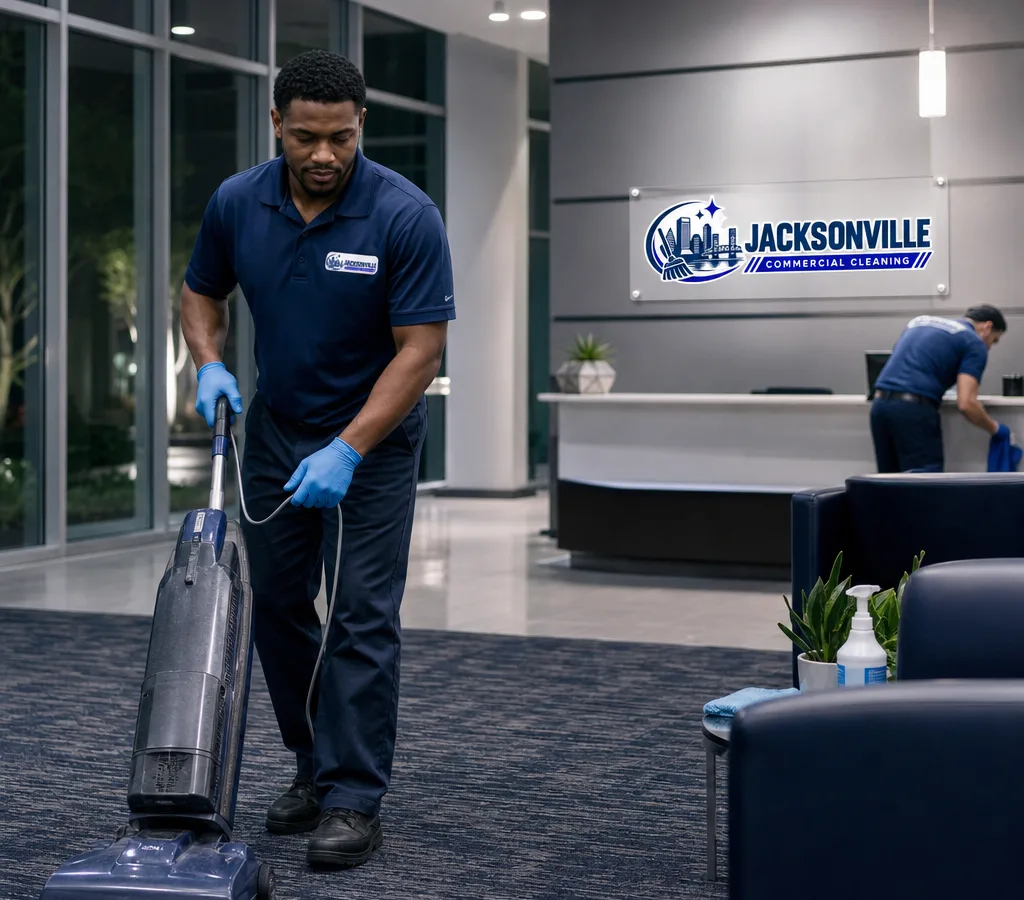
Professional commercial cleaner working in a modern Jacksonville office lobby after hours
Clinical spaces, careful work

Medical Facility Cleaning in Jacksonville FL

Clinics, dental practices and specialist offices need cleaning that respects clinical boundaries and documents itself. We work to a written room-by-room routine your practice manager can hand to anyone who asks.

✓Room-by-room routines
✓Touchpoint discipline
✓Quiet hours scheduling
✓Written task records
Where patients form opinions

Cleaning a practice patients trust

Patients read a waiting room closely, because they have nothing else to do. Floor edges, chair arms, the ledge below a window, the condition of the restroom: those details become their estimate of how carefully the practice works, and they form that estimate before meeting anyone clinical.

Behind the reception wall the requirements change. Exam rooms, treatment areas and sterilization spaces carry rules your practice sets, and a cleaning crew's job is to work inside those rules rather than around them. That means knowing which surfaces are ours, which belong to clinical staff, where cleaning stops at a doorway, and what product may be used in each room. Those answers come from your protocols, written into the scope, not from a general checklist.

Humidity here makes damp mop heads, entry mats and restroom grout work harder than they appear to, so drying time and equipment rotation carry real weight in a clinical building where a lingering smell undermines everything else the practice does well.

Request a Callback
Zone by zone

What medical facility cleaning includes

What this covers in practice, from reception and waiting areas, exam and treatment rooms through the rest of the list below, each with the detail that matters on site.

Request a Callback

Reception and waiting areas

Seating, arms, side tables, magazine ledges, reception counters, glass and the floor beneath every chair get worked rather than passed over. These surfaces take constant contact from people who may be unwell, and they are the first thing anyone entering the practice assesses.
Exam and treatment rooms

Floors, baseboards, cabinet faces, sinks, waste receptacles and the horizontal surfaces your protocol assigns to cleaning staff are covered to a written routine. Clinical equipment, instrument trays and anything your staff reserves for themselves stay with them, recorded in the scope.

High-contact surface routine

Door handles and push plates, light switches, handrails, reception pens and counters, restroom fittings and elevator buttons follow a disciplined sequence with correct product dwell time. Working in a set order is what stops a crew from carrying soil from a busy area into a quiet one.

Restrooms in a clinical setting

Patient restrooms see heavy use and close scrutiny. Fixtures, grab rails, partitions, dispensers, mirrors and floor edges get detail work, with attention to the grout and the base of fittings where odor and staining develop in a humid climate.

Corridors, floors and entrances

Vinyl and tile corridors show every scuff under clinical lighting, and entry mats carry in grit that abrades them. Dust management, edge detail and the correct maintenance method for each floor keep a suite looking cared for between periodic refinishing.

Staff areas and break rooms

Staff rooms, lockers, kitchenettes and administrative offices get the same standard as patient space. A practice where the back of the suite is neglected tends to find that standard drifting forward into the rooms patients see.

Your protocol leads

How a practice scope is written

The scope starts from your own infection-control and room-use protocols rather than from a generic template. We ask which rooms cleaning staff may enter, which surfaces are assigned to clinical staff, what product restrictions apply, how waste is separated and who holds responsibility at each boundary. Those answers become the written routine, room by room and task by task.

Frequencies then follow room use. Waiting areas, restrooms and corridors usually need daily attention, exam rooms follow your clinical turnover practice, and periodic work covers floors, high surfaces, vents and detail cleaning.

Regulated medical waste and sharps handling remain with your clinical staff and the specialist waste provider you already retain, and the scope names that boundary plainly so nobody is interpreting it during a busy clinic day.

Request a Callback
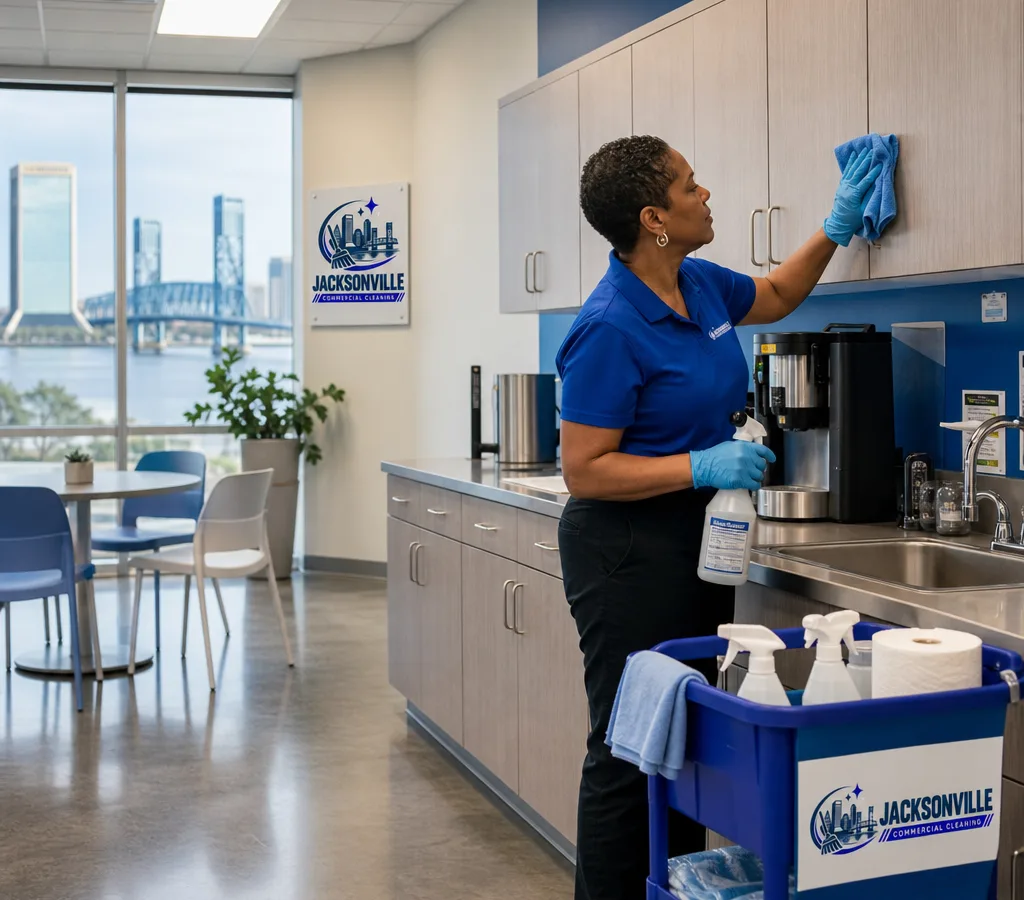
Commercial cleaner performing a detailed deep clean in a Jacksonville office breakroom
Starting inside the rules

How we begin at a medical facility

What this covers in practice, from meet the practice manager, document the room-by-room routine through the rest of the list below, each with the detail that matters on site.

Request a Callback
01

Meet the practice manager

The walkthrough happens with whoever owns infection control, going room by room to record use, sensitivity, product restrictions and the boundaries the crew must not cross. Nothing in the plan gets written before that conversation happens.

02

Document the room-by-room routine

Each room receives its own task list, frequency and product note, with the clinical and cleaning responsibilities separated in writing. A practice manager can hand that document to an auditor or a new hire without translating it first.

03

Set the access and quiet window

Most practices prefer evening or early morning service so patient care is never interrupted. Alarm procedures, which rooms remain locked, and how the crew handles a room still in use get fixed before the first visit.

04

Train crews on the suite

Crews are briefed on the written routine, the order of work from quiet zones toward busy ones, separate cloths kept to each area and the product rules for each room. Consistency comes from the document, not from memory.

05

Record and review the work

Completed tasks are recorded so the practice has evidence of what was done and when. Supervisor reviews check the routine is holding, and findings go back to the practice manager with anything the building needs from maintenance.

Practices we serve

Medical cleaning across Jacksonville

Medical work concentrates in Southside and Baymeadows, where clinical office parks cluster, and around the Downtown hospital corridors. Family and dental practices fill Mandarin and Orange Park, Riverside and San Marco hold specialist offices in older converted buildings with original floors, Arlington adds suburban clinics, and the Northside brings standalone practices and urgent care suites.

Building age changes the method considerably. A converted older property often has wood trim, original tile and plumbing that respond badly to the chemistry a purpose-built clinical suite tolerates without complaint.

Practices needing a periodic reset beyond the daily routine can bring in our deep cleaning service as a scheduled addition without altering the recurring plan at all.

Drivers behind the quote

What medical facility cleaning costs here

Pricing a clinical building rests on treatment room count, total area, how many restrooms serve patients, the sensitivity of rooms a crew may enter, and the frequency your practice needs. Documentation adds time too, since recording work properly is part of the service rather than an extra.

How the estimate lands also depends on access hours, whether cleaning happens while any part of the suite is operating, the floor types in use, product restrictions your protocol imposes, and the periodic work attached. Walking the suite with your practice manager settles it.

Request a Callback
Questions practice managers ask

Medical cleaning questions answered

Answers to what buildings ask before they arrange a walkthrough, covering scope, scheduling and how the work gets checked.

Are your crews trained for clinical environments?

Crews are briefed on the written routine for your suite: the order of work from low-traffic to high-traffic areas, cloth and mop separation between zones, correct product dwell times, and the boundaries your protocol sets. The training is specific to your building rather than a general qualification, which is why the document matters so much.

Who handles medical waste and sharps?

Those stay with your clinical staff and the specialist waste provider you already retain. Our crews handle general waste streams and the receptacles your protocol assigns to cleaning staff. The boundary is written into the scope during onboarding so there is no ambiguity on a busy clinic day.

Can you clean during patient hours?

Evening or early morning service is the usual arrangement, keeping the suite undisturbed while patients are present. Where a practice wants daytime coverage for restrooms and waiting areas, that is scheduled as a separate visit with rules about which rooms the crew may enter while clinic is running.

What product restrictions can you work with?

Many practices specify what may be used on particular surfaces or in particular rooms, sometimes because of equipment, sometimes because of patient sensitivity. Those restrictions get recorded during the walkthrough and built into the routine, including which rooms use only products your practice supplies.

Do you provide a record of what was cleaned?

Work is recorded against the written room-by-room routine, so the practice holds evidence of which tasks were completed and when. Practice managers generally want that for internal audits and for answering questions from inspectors or their own corporate structure.

How do you keep soil from moving between rooms?

By working in a fixed order and separating equipment by zone. Cloths and mop heads are not carried from a restroom into a treatment room, and the sequence moves from the least sensitive areas toward the most. That discipline sits in the written routine rather than being left to judgment.

Review your protocols with us

Bring your infection-control rules and room list to a walkthrough. We will write the routine around them, name every boundary clearly, and set a schedule that leaves patient hours untouched.

Request a quote

Tell us about your facility

Send the building type, the areas that matter most and your preferred service window, and we will follow up to arrange a walkthrough.